C.K. Gupta
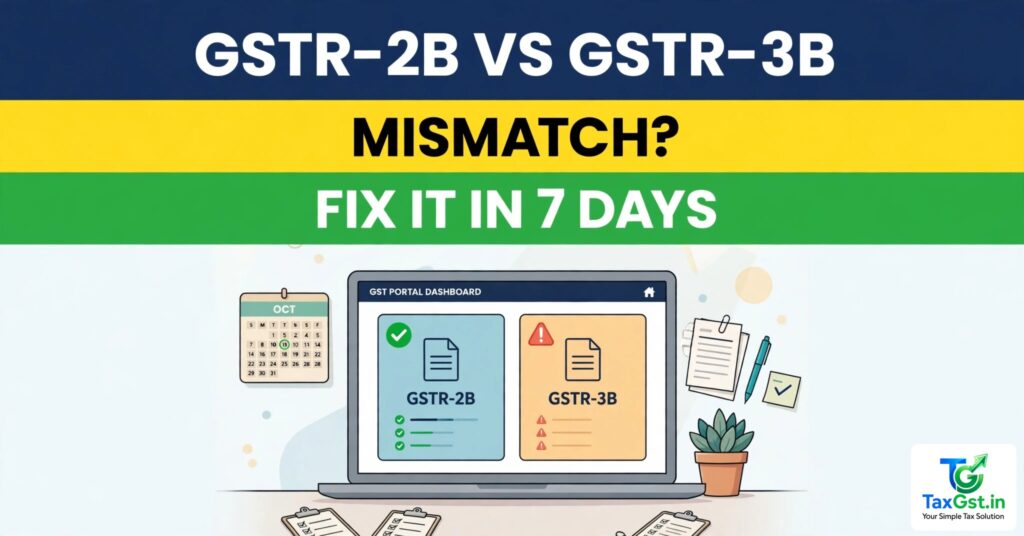
Your accountant files GSTR-3B on the 20th, claiming ₹8,40,000 of input tax credit. On the 22nd, an intimation lands in your portal inbox: Form DRC-01C. The system says your GSTR-2B showed only ₹7,60,000 of credit for that month, a gap of ₹80,000, and you have seven days to answer. You know the purchases are genuine. The invoices are in your drawer. The suppliers are real. So why is the portal treating you like a defaulter? Because the portal does not check your drawer. It checks GSTR-2B, and GSTR-2B only records what your suppliers uploaded in time. Here is how the mismatch machine works, and how to stay ahead of it.
What GSTR-2B actually is
GSTR-2B is an auto-generated statement of the input tax credit available to you for a tax period, built from the GSTR-1 returns your suppliers filed. It is generated on the 14th of the following month, and it is static for that period: invoices your supplier uploads after the cut-off appear in the next month’s 2B, not this one. GSTR-3B, due on the 20th, is your own summary return, where you claim the credit. The two numbers should match. When they do not, and the gap crosses the system’s tolerance, the portal acts on its own. If your supplier has not filed at all, the credit does not appear in your 2B, and the seven real reasons ITC goes missing from GSTR-2B covers the full diagnostic.
DRC-01C: the ITC-side intimation
Rule 88D of the CGST Rules deals with the input side. When the ITC you availed in GSTR-3B exceeds the ITC available in GSTR-2B beyond the notified threshold, the portal generates Form DRC-01C. It is not a demand notice and not yet a show-cause notice. It is an automated intimation with a seven-day clock: seven calendar days from the date it lands on the portal, not from the date you open it. You have two ways to close it. Pay the excess credit through Form DRC-03, with interest, and report the challan in Part B. Or file a reasoned reply in Part B explaining why no excess exists, with your working attached. Legitimate explanations include invoices the supplier uploaded after the 2B generation date, which will appear in the following month’s 2B, and credit-note adjustments not yet visible in 2B at the time you filed.
Do not confuse DRC-01C with its sibling. Rule 88C generates Form DRC-01B when the outward tax liability in your GSTR-1 exceeds the tax you paid in GSTR-3B, above a threshold of ₹25 lakh and 20% of the tax paid. That one is about tax you underpaid on sales. DRC-01C is about credit you over-claimed on purchases. Both carry the same seven-day window, and both escalate the same way if ignored: a demand under Section 73 for a genuine error, or Section 74 where the department alleges fraud or wilful misstatement, with 18% interest under Section 50 and penalty that can reach 100% of the tax in dispute.
The five causes that produce most gaps
| Cause | What happened | Fix |
|---|---|---|
| Supplier filed GSTR-1 late | Invoice missed the 2B cut-off for the month | Claim the credit in the month it appears in 2B; do not claim early |
| QRMP supplier files quarterly | Supplier’s GSTR-1 comes once a quarter, your 3B is monthly | Track the supplier’s quarter; claim only when the invoice is in 2B |
| Invoice in the wrong period | Supplier dated the invoice in a different month than yours | Ask the supplier to amend through GSTR-1; claim in the right period |
| Ineligible credit claimed | Blocked items under Section 17(5), personal use, exempt supplies | Reverse it yourself through DRC-03 before the portal finds it |
| Supplier never paid the tax | Supplier filed GSTR-1 but not GSTR-3B | Rule 37A: reverse the credit by 30 November following the financial year; reclaim it when the supplier pays |
The last row is the one businesses miss. Rule 37A of the CGST Rules requires you to reverse input tax credit where the supplier has not discharged the tax, by 30 November following the end of the financial year in which the credit was availed. The credit is not lost forever: it can be reclaimed in the month the supplier finally pays. But until then, it sits as a liability in your books, and the 30 November deadline is the same date as the Section 16(4) cut-off for claiming last year’s credit, which the 30 November ITC deadline guide explains in full. The related 180-day rule is different: that is Rule 37, which reverses credit when you have not paid your supplier within 180 days, covered in the Rule 37 ITC reversal guide.
The monthly reconciliation routine
The only reliable defence is a routine that runs before the 20th, not after the intimation. It takes about an hour a month for a small business, and it is the difference between a clean filing and a seven-day scramble.
- On the 14th, download GSTR-2B and compare it with your purchase register, invoice by invoice. Flag every invoice in your books that is missing from 2B.
- Chase the supplier the same day. A phone call on the 14th gets the invoice into the next GSTR-1. A phone call on the 25th gets you a DRC-01C.
- Claim only what 2B shows. If the invoice will appear next month, claim it next month. Claiming early is what triggers the intimation, even when the purchase is genuine.
- Keep a blocked-credit list. Motor vehicles, food and catering, club memberships and employee insurance are blocked under Section 17(5) unless a specific exception applies, and the blocked-ITC guide lists every category. Never let these into your 3B claim.
- Reconcile GSTR-1 against GSTR-3B too. The same discipline on the sales side prevents DRC-01B, and the GST notice survival guide explains the weekly notice-check routine that catches both intimations early.
What to do when DRC-01C has already arrived
First, read Part A carefully: it shows the excess credit figure broken down by tax head. Second, reconcile that exact month, not the current one, and find the invoices behind the gap. Third, decide within two days, not on day seven. If the excess is real, pay it through DRC-03, including interest at 18% per annum under Section 50, and report the challan in Part B. Paying voluntarily before adjudication is far cheaper than a Section 73 demand with penalty. If the gap is only timing, file Part B with the invoice list and the supplier’s GSTR-1 filing proof, and keep the acknowledgement. If you do nothing, the portal blocks your next GSTR-1 filing on the sales side for DRC-01B, and the ITC gap proceeds to a formal demand. The DRC-01 demand-notice reply guide covers the demand stage step by step.
One last timing point. The GSTR-3B for October 2026 was due on 20 November, and the GSTR-9 annual return for FY 2025-26 is due on 31 December 2026. Both are natural reconciliation points: if your 2B and 3B disagree for October, fix it before the annual return locks the year in. The compliance calendar hub lists every due date for the rest of the financial year.
Frequently asked questions
Is DRC-01C a demand notice?
No. It is an automated intimation under Rule 88D. It becomes a demand only if you ignore it or your reply is rejected, when proceedings start under Section 73 or 74.
How many days do I get to reply to DRC-01C?
Seven calendar days from the date the intimation is generated on the portal, including weekends.
Can I claim ITC that is not in GSTR-2B yet?
No. Claim it in the month it appears in 2B. Claiming early is the single most common trigger for DRC-01C.
What is the difference between DRC-01B and DRC-01C?
DRC-01B, under Rule 88C, flags outward liability in GSTR-1 exceeding tax paid in GSTR-3B. DRC-01C, under Rule 88D, flags ITC claimed in GSTR-3B exceeding ITC available in GSTR-2B.
What happens to ITC if my supplier never pays the tax?
Under Rule 37A you must reverse it by 30 November following the financial year, and you can reclaim it in the month the supplier pays.
Sources
- Rule 88D, CGST Rules, 2017 — Form DRC-01C intimation where ITC availed in GSTR-3B exceeds ITC available in GSTR-2B beyond the notified threshold; seven-day reply window.
- Rule 88C, CGST Rules, 2017 (inserted by Notification No. 26/2022-Central Tax, dated 26 December 2022) — Form DRC-01B intimation for GSTR-1 vs GSTR-3B liability mismatch, threshold above ₹25 lakh and above 20% of tax paid.
- Rule 37A, CGST Rules, 2017 — reversal of input tax credit where the supplier has not discharged tax, by 30 November following the end of the financial year; re-availment when the supplier pays.
- Section 50, CGST Act, 2017 — interest at 18% per annum on wrongly availed input tax credit; Section 73 and Section 74 — demand proceedings for non-fraud and fraud cases.
- Section 16(4), CGST Act, 2017 — last date to claim input tax credit for a financial year is 30 November following the year-end or the date of furnishing the annual return, whichever is earlier.
Discover more from TaxGst.in
Subscribe to get the latest posts sent to your email.