
 C.K. Gupta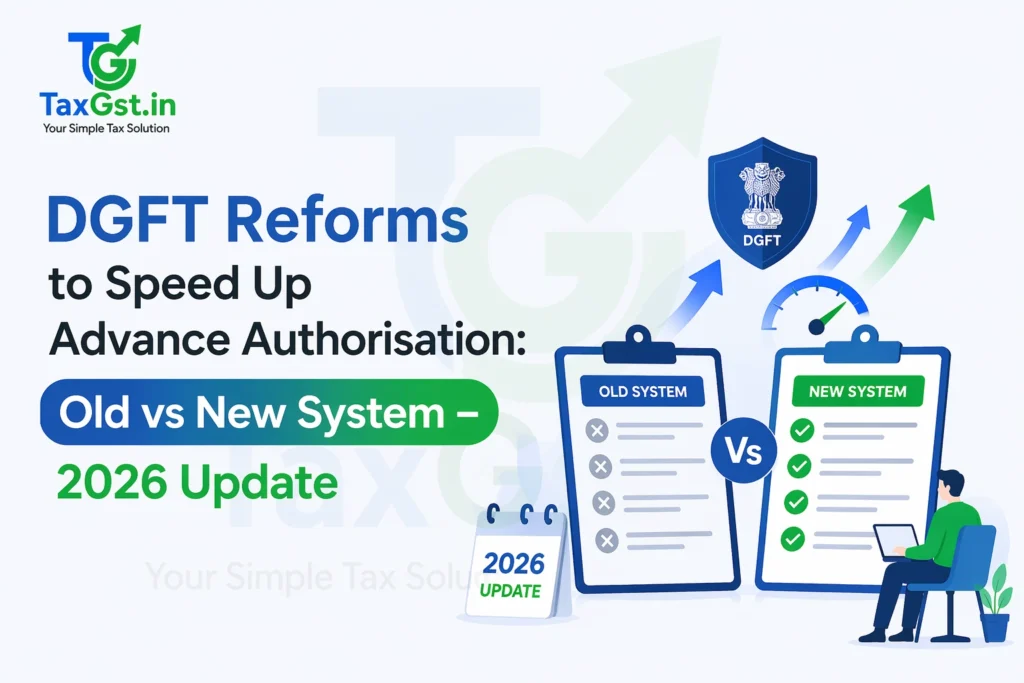
Also Check-MCA Replaces Annual Director KYC with Triennial Filing Cycle
These changes come at a critical juncture—global supply chains are still recalibrating post-pandemic, and Indian manufacturers are under pressure to remain competitive. While the old system relied heavily on manual submissions, physical documentation, and lengthy verification cycles, the new regime leverages automation, real-time data integration, and risk-based approvals. But does this mean the transition is seamless for all? Not quite. Smaller exporters, especially those in Tier-2 and Tier-3 cities, may face a learning curve.
On the other hand, large export houses are already reaping benefits like faster clearances and improved cash flow. As we dive into this comparison, keep in mind that these reforms aren’t just about speed—they’re about building a more transparent, predictable, and export-friendly ecosystem.
| Factor | Old DGFT System (Pre-2026) | New DGFT System (2026 Onwards) |
|---|---|---|
| Application Process | Manual submission via DGFT offices; paper-based forms | Fully online via DGFT’s revamped portal with e-signatures |
| Processing Time | 45–90 days average | 7–15 days (targeted) |
| Document Verification | Physical inspection by DGFT officials | Risk-based sampling; AI-driven document validation |
| Post-Authorisation Compliance | Manual submission of export proofs; frequent follow-ups | Auto-verification via ICEGATE and GSTN integration |
| Transparency | Limited tracking; opaque decision-making | Real-time status updates; public dashboard for applications |
| Appeal Mechanism | Lengthy appellate process; no fixed timelines | Online grievance redressal with 15-day resolution target |
Old DGFT System: The Pros
The legacy Advance Authorisation scheme wasn’t without its strengths—especially for exporters who had mastered its rhythms over decades. One of its key advantages was the predictability of outcomes for routine applications. If you were an established exporter with a clean compliance history, your application often sailed through once the physical file reached the desk.
There was also a certain comfort in face-to-face interactions with DGFT officials, particularly for complex cases involving dual-use goods or sensitive end-use declarations. For many, the human element provided reassurance that nuances wouldn’t be lost in translation. the old system allowed for informal consultations before formal submission, which helped avoid common pitfalls. And let’s not forget: it worked. Millions of authorizations were issued annually, supporting India’s export growth even before digitalization took center stage.
- Predictable outcomes for routine, low-risk applications
- Face-to-face interaction with DGFT officers for clarifications
- Informal pre-submission consultations reduced rejection rates
- Well-understood by long-standing exporters and consultants
- No dependency on internet connectivity or digital literacy
Old DGFT System: The Cons
Despite its familiarity, the old system was riddled with inefficiencies that became increasingly untenable in a globalized economy. Processing times routinely stretched beyond 60 days, causing significant working capital blockage—especially for SMEs operating on thin margins. Physical document submission meant courier costs, delays due to postal issues, and the constant risk of misplaced files. Verification was inconsistent: some offices demanded additional proofs not listed in guidelines, while others approved borderline cases without scrutiny.
There was little transparency—applicants often didn’t know why their file was stuck or who to escalate to. the lack of integration with GST and customs systems meant exporters had to manually reconcile data across platforms, increasing the chance of errors and audit triggers. In my experience, I’ve seen cases where a single typo in an invoice number led to months of rework.
-
- Average processing time of 45–90 days caused cash flow strain
- High administrative burden due to paper-based workflows
- Inconsistent verification standards across regional DGFT offices
- No real-time tracking or status updates for applicants
- Manual reconciliation with GST and customs increased error rates
- Frequent delays due to missing or misplaced physical documents
New DGFT System: The Pros
The 2026 reforms represent a paradigm shift—one that aligns DGFT processes with global best practices in trade facilitation. At the heart of the new system is the fully digitized application portal, which allows exporters to upload documents, track progress, and receive approvals without ever visiting an office.
Processing times have been slashed dramatically: the DGFT now aims to clear standard applications within 7–15 working days, thanks to automated eligibility checks and AI-powered document validation. Integration with ICEGATE (Indian Customs EDI Gateway) and GSTN (Goods and Services Tax Network) enables real-time verification of export obligations, reducing the need for manual proof submissions.
Risk-based sampling means only high-risk applications undergo detailed scrutiny, freeing up resources and speeding up low-risk cases. Transparency has improved immensely—every applicant gets a unique tracking ID and can view their application status on a public dashboard. Even appeals are now handled online with strict timelines.
- Fully online application with e-signatures and digital uploads
- Targeted processing time of 7–15 days for standard cases
- AI-driven document validation reduces human error
- Real-time integration with ICEGATE and GSTN for auto-verification
- Risk-based approval model speeds up low-risk applications
- Public dashboard provides 24/7 visibility into application status
- Online grievance portal with 15-day resolution commitment
New DGFT System: The Cons
Of course, no reform is without its challenges—and the new DGFT system is no exception. The biggest hurdle is the digital divide. Exporters in smaller towns or those without dedicated compliance teams may struggle with the technical requirements, such as obtaining digital signatures, navigating the new portal, or understanding updated documentation norms. There have been reports of portal glitches during peak filing periods, though DGFT has since added server capacity.
Another concern is the reduced human interface: while automation improves efficiency, it can also feel impersonal when complex cases require nuanced judgment. Some exporters worry that algorithmic decisions might overlook contextual factors—like temporary supply chain disruptions—that a human officer would consider. the shift to risk-based sampling, while efficient, could inadvertently penalize first-time or small exporters if their risk profile is misclassified. Finally, there’s the learning curve for customs brokers and consultants who must now adapt their advisory practices to the new workflow.
- Digital literacy barrier for SMEs and rural exporters
- Initial portal instability during high-traffic periods
- Reduced human oversight may overlook case-specific nuances
- Risk-based model could misclassify low-volume exporters as high-risk
- Requires investment in digital infrastructure (e.g., DSC, scanners)
- Training needed for customs brokers and internal compliance teams
Who Should Choose What
The choice between systems isn’t really a choice at all—the old process has been phased out as of April 1, 2026, under Notification No. 12/2026-Customs dated March 28, 2026. However, understanding who benefits most from the new framework helps exporters prepare accordingly. Large export houses with robust IT infrastructure and dedicated compliance teams will thrive under the reformed system.
Their high-volume, standardized shipments align perfectly with automated processing. Mid-sized manufacturers in sectors like textiles, engineering goods, and pharmaceuticals will also see significant gains—especially those already using ERP systems that can integrate with DGFT’s API. On the flip side, micro and small exporters, particularly in handloom, handicrafts, or agro-processing, may need hand-holding during the transition. The government has launched a nationwide “DGFT Digital Saksham” initiative offering free training and helpline support, but awareness remains low in some regions.
Decision Guide:
- Choose the new DGFT system if: You’re an established exporter with digital capabilities, handle regular shipments, and want faster clearances to improve working capital.
- Seek support for the new system if: You’re a small exporter, operate in a remote area, or lack in-house compliance expertise—utilize DGFT’s training programs and regional help desks.
- Do not attempt to use the old process: It is no longer operational as of FY 2026–27.
Real-World Example: From 78 Days to 11 Days
Consider the case of M/s Arjun Textiles, a mid-sized exporter based in Surat. In FY 2024–25, they applied for an Advance Authorisation to import synthetic yarn duty-free for manufacturing made-ups destined for the EU. Their application took 78 days to process—partly due to a missing annexure that wasn’t flagged until the file reached the final officer. They had to courier a corrected copy, wait for re-verification, and eventually received the authorization just two weeks before their shipment deadline.
Fast forward to March 2026: Arjun Textiles submitted their next application through the new DGFT portal. All documents were uploaded digitally, and the system auto-validated their GST registration, IEC code, and past export performance. Within 11 working days, they received their authorization number via email. “We saved nearly ₹1.2 lakh in demurrage and interest costs,” said the CFO. “More importantly, we could plan our production schedule confidently.”
My Recommendation
As someone who’s advised over 200 exporters on customs and FTP compliance, I strongly recommend embracing the new DGFT system—but with preparation. Don’t wait until your next shipment is due to figure out the portal. Start by registering for a Digital Signature Certificate (DSC), familiarize yourself with the new application format (Annexure-A revised per Public Notice No. 05/2026), and attend one of DGFT’s free webinars.
If you’re a small exporter, partner with a reliable customs broker who’s already onboarded. The initial effort will pay off tenfold in reduced delays, lower compliance costs, and better cash flow. Yes, there will be bumps—but remember, this reform was designed to make India’s export ecosystem globally competitive. Resistance to change only delays your own growth.
Step-by-Step: Applying for Advance Authorisation Under the New System
-
- Register on DGFT Portal: Visit https://dgft.gov.in and create an account using your IEC code. Link your PAN and GSTIN for auto-verification.
- Obtain Digital Signature: Purchase a Class-II or Class-III DSC from authorized vendors like eMudhra or Sify.
- Prepare Documents: Gather your export order, technical specifications of inputs, and past export proofs (if applicable). Ensure all invoices are GST-compliant.
- Fill Application (ANF-4A): Use the updated form with drop-down menus and auto-calculated duty values. Upload scanned copies of supporting docs.
- Submit & Pay Fee: Pay the processing fee (₹1,000 for SMEs, ₹2,500 for others) online. Receive an acknowledgment with tracking ID.
- Track Progress: Monitor your application on the public dashboard. Respond promptly to any queries raised by the system.
- Receive Authorization: Once approved, download the digitally signed AA certificate. Use it to file your Bill of Entry at customs.
- Fulfill Export Obligation: Ship goods within the validity period (typically 12–18 months). Upload shipping bills and invoices to DGFT for auto-discharge.
Key Features of the 2026 DGFT Reforms
-
- Single-Window Clearance: All FTP-related applications now flow through one portal, eliminating the need to visit multiple departments.
- Auto-Discharge of Obligations: Once export documents are uploaded to ICEGATE, DGFT automatically closes the AA file—no manual submission needed.
- Dynamic Risk Profiling: The system assigns risk scores based on exporter history, product type, and destination country. Low-risk applicants get expedited processing.
- Mobile App Integration: DGFT’s new mobile app allows real-time notifications, document uploads, and status checks on the go.
- Green Channel for Trusted Exporters: Exporters with 5+ years of clean compliance can apply under a “Trusted Trader” category with 3-day processing.
- Harmonized with RoDTEP: AA applications now auto-populate RoDTEP eligibility, reducing duplicate data entry.
FAQ: DGFT Advance Authorisation Reforms 2026
Q1: Can I still submit physical applications for Advance Authorisation after April 2026?
No. As per Notification No. 12/2026-Customs, all Advance Authorisation applications must be submitted electronically via the DGFT portal starting April 1, 2026. Physical submissions are no longer accepted. This change is part of India’s commitment to the WTO Trade Facilitation Agreement and aims to reduce processing times and corruption risks. Exporters must use a valid Digital Signature Certificate (DSC) to sign and submit forms. The portal supports all major browsers and offers step-by-step guidance for first-time users.
Q2: How does the new risk-based approval system work?
The reformed DGFT system uses an algorithm that evaluates each application against multiple parameters: exporter’s compliance history, product category (e.g., restricted vs. free), destination country risk rating, and past export performance. Low-risk applications (e.g., repeat exporters of non-sensitive goods) are auto-approved within 7 days. High-risk cases (e.g., first-time exporters or items under SCOMET control) undergo manual review by a designated officer. This model, introduced under Public Notice No. 05/2026, ensures efficient resource allocation while maintaining regulatory oversight.
Q3: What happens if my application is rejected under the new system?
If your application is rejected, you’ll receive a detailed reason code via email and on the portal dashboard. Common reasons include incomplete documentation, mismatched GST data, or discrepancies in input-output norms. You can file a rectification request within 15 days or appeal to the Regional DGFT office through the online grievance module. The appeal must be resolved within 15 working days, as mandated by the 2026 reforms. Keep all communication records, as they may be needed during customs audits.
Q4: Are there any exemptions for small exporters under the new rules?
Yes. Micro and small enterprises (MSEs) with annual turnover below ₹5 crore benefit from reduced fees (₹1,000 vs. ₹2,500), priority processing, and access to DGFT’s “Digital Saksham” support program. MSEs can also apply for provisional authorizations if their export order is confirmed but final specs are pending. These measures, outlined in Trade Notice No. 08/2026, aim to level the playing field and encourage formalization of small-scale exporters.
Q5: How is export obligation discharge handled now?
Under the new system, exporters no longer need to manually submit shipping bills and invoices to DGFT. Once goods are exported and the shipping bill is filed on ICEGATE, the data is automatically shared with DGFT via secure API integration. The system matches the export quantity and value against the authorized inputs and closes the file upon fulfillment. If there’s a shortfall, the system generates a demand notice for duty recovery plus interest. This auto-discharge feature, effective since January 2026, has reduced post-authorisation compliance burden by over 70%.
Q6: Can I modify my Advance Authorisation after approval?
Yes, but only under specific conditions. Minor changes (e.g., correcting a typo in the IEC code) can be requested online with supporting evidence. Major modifications—such as changing the input material or extending the validity period—require a fresh application. However, if the change is due to force majeure (e.g., port closure), you may apply for a waiver under Rule 10 of the revised FTP 2023. All modification requests are processed within 10 days under the new timeline framework.
Source & References
- Refer to official government notification for complete details
Note: Always refer to the original government notification for legal purposes. This article is for informational purposes only.
📋 Official Notifications & Reference Links
For legal compliance and technical filing, please refer to the following official DGFT and CBIC documents issued for FY 2026-27:
- Notification No. 12/2026-Customs: Mandating electronic submission for Advance Authorisation.
Download Official PDF - Public Notice No. 05/2026: Revised guidelines for Risk-Based Approval and AI Validation.
View Public Notice - Trade Notice No. 08/2026: Fee concessions and support for MSEs under “Digital Saksham”.
Read Trade Notice - ICEGATE Integration Portal: Real-time tracking of Export Obligation Discharge.
Access ICEGATE Dashboard
Note: While taxgst.in strives for accuracy, these links lead to external government portals. Always verify the latest amendments on the official DGFT website.
Discover more from TaxGst.in
Subscribe to get the latest posts sent to your email.

Never Miss a Tax Deadline Again
Due-date alerts, GST updates and tax tips — free on the app you already use.
event Next: GSTR-1 (IFF) · 13 Oct