
 C.K. Gupta
India’s biggest GST overhaul since 2017 — widely called GST 2.0 — took effect on 22 September 2025, the first day of Navratri. Approved at the 56th meeting of the GST Council on 3 September 2025, chaired by Union Finance Minister Nirmala Sitharaman, the reform collapses the old 4-slab structure (5% / 12% / 18% / 28%) into a simpler system: 5% and 18% as the main slabs, 40% for sin and luxury goods.
For households this means most daily-use items got cheaper. For businesses it means new HSN-wise rates, updated price lists and reprinted invoices. This guide walks you through both.
The new rate map in one table
| Rate | What falls here (common examples) | Old position |
|---|---|---|
| 0% (exempt) | Fresh/unprocessed food, UHT milk, paneer, all breads including pizza bread, pre-packaged roti & paratha, individual life & health insurance premiums | Insurance was 18%; paneer and roti were taxed in various slabs |
| 3% | Gold, silver, platinum jewellery and coins | Unchanged (special rate) |
| 5% | Essentials and mass-use items: packaged foods, restaurant food (no ITC), medicines, footwear, textiles and apparel, fertilisers, soaps, shampoo, toothpaste, bicycles | Many items moved here from 12% or 28% |
| 18% | Standard rate for most goods & services: electronics (ACs, TVs, dishwashers), small cars, cement, capital goods, professional services, telecom | Mostly unchanged; items like ACs and cement came down from 28% |
| 40% (demerit) | Pan masala, gutkha, cigarettes & other tobacco products (transitional), aerated & caffeinated sugary drinks, luxury cars, SUVs, yachts, private aircraft | Previously 28% + compensation cess, often totalling 43–50%+ |
Tobacco products continue at 28% plus the existing compensation cess for now, and shift to 40% once the Centre’s compensation-cess borrowing obligations are repaid. Always check the item’s current CBIC notification before quoting a rate for tobacco.
What got cheaper for consumers
- Health & life insurance: individual life and health policies (including term plans, endowment, family floater and senior-citizen health covers) are now exempt — down from 18%. Reinsurance of such individual policies is also exempt.
- Everyday food: UHT milk, paneer, all breads (including pizza bread), pre-packaged roti and paratha — exempt or 5% depending on the item.
- Home appliances: air conditioners, refrigerators, TVs, dishwashers, washing machines — 28% down to 18%.
- Cars: small cars and most mass-market vehicles — 18% (from 28% + cess); SUVs and larger “personal transport vehicles” — flat 40% with no cess on top.
- Cement: 28% down to 18%, a direct boost to housing.
- Toiletries & medicines: many soaps, shampoos, toothpaste, and a long list of drugs moved to 5%.
Example
A ₹40,000 air conditioner that attracted 28% GST (₹11,200 tax, ₹51,200 total) now attracts 18% (₹7,200 tax, ₹47,200 total) — roughly a ₹4,000 saving for the buyer, before any dealer discounts.
What stayed the same or became costlier
- Restaurant food: still 5%, still without input credit.
- Gold & silver: still 3%.
- Sin goods: aerated sugary beverages and caffeinated drinks moved to 40%; tobacco continues under the cess framework pending the shift to 40%.
- Standard services (professional fees, repairs, telecom, transport of goods by most modes): 18%.
What businesses must do after 22 September 2025
- Update HSN-wise price lists: re-check every SKU against the new notification schedule; several HSN codes changed slabs.
- Fix ERP / billing software: load the new rate masters before invoicing; old 12%/28% combinations will now fail buyer reconciliation.
- Handle stock transition: goods sold after 22 Sept must be invoiced at new rates. ITC on earlier inputs is unaffected, but margins change where output rates fell faster than input rates.
- Reissue rate-change communications: retailers and distributors should circulate the new price lists to avoid billing disputes.
- Watch CBIC notifications: the rate changes were notified in September 2025 (CGST/IGST/UTGST rate notification amendments). Keep the notification numbers handy for audit files.
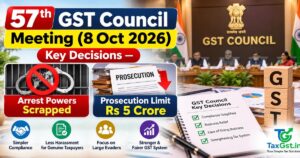
Council decisions also include process reforms approved in principle — such as a capped GSTR-3B edit window, truncated GSTR-1 filing for small taxpayers and changes to the ITC availing deadline effective from 1 November 2026. These are procedural; follow CBIC updates as the enabling notifications land.
Why the reform matters
Fewer slabs mean fewer classification disputes, simpler compliance for MSMEs, and faster invoice matching. The Council expects the simplification to raise compliance, broaden the base and, by lowering taxes on mass-consumption goods, support demand. For small businesses the single biggest practical gain is one rate chart instead of four.
That said, GST 2.0 is a transition. Where an item’s classification is ambiguous, take a written position (or file an advance ruling) rather than guessing — penalties for wrong classification have not gone away.
Frequently Asked Questions
When did GST 2.0 rates become effective?
22 September 2025. The 56th GST Council approved the changes on 3 September 2025 and CBIC issued the rate notifications for a 22 September rollout.
What is the 40% GST rate for?
It is a special “demerit” rate for sin and luxury goods — pan masala, aerated sugary drinks, luxury cars, SUVs, yachts and private aircraft — replacing the earlier 28% + compensation cess combination on those items.
Is GST on insurance really zero now?
Yes — individual life and health insurance policies (including term plans and family floaters) are exempt from 22 September 2025. Group/corporate covers continue to attract GST, so confirm the policy type with your insurer.
Do I need a new GST registration because of GST 2.0?
No. Your GSTIN, returns and registration are unchanged. Only the rates on your invoices change — update your billing software and price lists.
Sources & Official References
ITR, GST returns, notices and registrations — fixed fees, human support, on-time filing.
Fact-checked on 2025-09-25 • Content library version 2025.09.1
Disclaimer: This article is for general awareness only and is not legal, tax or professional advice. Tax rules change — always confirm current rates, limits and due dates with the official government portals listed above, or consult a qualified chartered accountant or tax practitioner before acting.
Discover more from TaxGst.in
Subscribe to get the latest posts sent to your email.


Never Miss a Tax Deadline Again
Due-date alerts, GST updates and tax tips — free on the app you already use.
event Next: GSTR-1 · 11 Oct