
 C.K. Gupta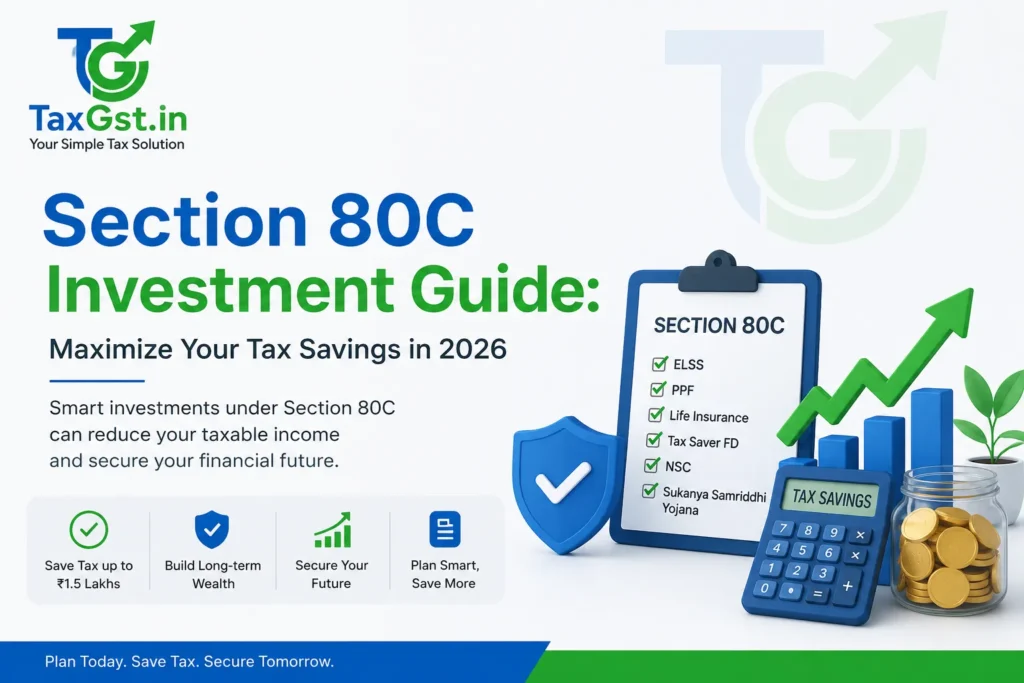
Under Section 231 of the new Income-tax Act, 2025, any individual or Hindu Undivided Family (HUF) can claim a statutory deduction of up to Rs. 1,50,000 per financial year on specified investments and expenses, available exclusively when opting out of the default tax regime. For the Financial Year 2026-27 (Assessment Year 2027-28), these provisions form the cornerstone of tax planning. Taxpayers can further claim an additional Rs. 50,000 deduction under Section 234 for voluntary National Pension System (NPS) contributions, taking the combined maximum investment benefit to Rs. 2,00,000.
Also Check-ITR-2 VS ITR-1 VS ITR-4: Which Income Tax Return Form Should You File This Year?
What is the New Section 231 Framework and How Does it Save Tax?
- Section 231 of the Income-tax Act, 2025 allows up to Rs. 1,50,000 deduction for individuals and HUFs under the alternative (old) tax regime only.
- Eligible instruments, as specified under Section 231, include Public Provident Fund (PPF), Employee Provident Fund (EPF), Equity Linked Savings Schemes (ELSS), life insurance premium payments, National Savings Certificates (NSC), Sukanya Samriddhi Yojana, home loan principal repayment, and tuition fees.
- Section 234 provides an additional deduction of Rs. 50,000 for National Pension System (NPS) contributions, which is over and above the Rs. 1.5 lakh limit under Section 231.
- The combined ceiling under Section 237 caps deductions under Sections 231, 232, and 233 at Rs. 1,50,000 for a Financial Year.
- For the Financial Year 2026-27 (Assessment Year 2027-28), the provisions of the Income-tax Act, 2025, as amended by the Finance Act, 2026, are applicable.
What Investments and Expenses are Eligible Under Section 231?
Section 231 is one of the most widely used tax-saving provisions under the new Income-tax Act, 2025. As per Section 231, it allows both individuals and Hindu Undivided Families (HUFs) to reduce their taxable income by up to Rs. 1,50,000 per financial year. This deduction is available by making specified investments or incurring specified expenses.
The deduction under Section 231 is available only if the taxpayer opts for the alternative (old) tax regime. Taxpayers who choose the default tax regime under Section 115BAC of the Income-tax Act, 2025, cannot claim this benefit.
The legal framework governing Section 231 is reinforced by Section 237 of the Act. As per Section 237, the aggregate deduction under Sections 231, 232, and 233 shall not exceed Rs. 1,50,000 in any case. This means that even if a taxpayer invests in multiple eligible instruments across these three sections, the combined claim is capped at Rs. 1.5 lakh. However, Section 234, which covers additional NPS contributions, is not subject to this ceiling, allowing a further deduction of Rs. 50,000.
For the current Financial Year 2026-27 (Assessment Year 2027-28), taxpayers must continue to rely on the provisions of the Income-tax Act, 2025. The income for this year is earned up to 31st March 2027, and the existing tax laws govern its assessment.
Who is Eligible to Claim Deductions Under Section 231?
Section 231 deductions are available exclusively to two categories of taxpayers: individuals and Hindu Undivided Families (HUFs). This is explicitly stated in Section 231 of the Income-tax Act, 2025. Companies, partnership firms, LLPs, and other business entities are not eligible to claim deductions under this section, regardless of their investment activity.
Within the individual category, the deduction is available to both resident and non-resident Indians, provided they have taxable income in India and have made eligible investments or payments. For salaried employees, the employee’s contribution to the Employee Provident Fund (EPF) qualifies for deduction under Section 231. The employer’s contribution, however, is exempt from tax but does not form part of the tax-saving deduction limit.
Self-employed individuals can claim deductions on eligible investments such as Public Provident Fund (PPF), Equity Linked Savings Schemes (ELSS), National Savings Certificates (NSC), and life insurance premiums. The critical condition, as per Section 115BAC of the Income-tax Act, 2025, is that the deduction is available only under the alternative (old) tax regime. Individuals and HUFs opting for the default tax regime under Section 115BAC are not entitled to any deduction under Section 231.
This means that even if a taxpayer has made all eligible investments, they cannot claim the benefit if they stay under the default regime. Taxpayers must therefore evaluate both regimes carefully before making their choice. The benefit of Section 231 can result in significant tax savings, particularly for those in the higher tax brackets under the old alternative regime.
- Available to: Individuals and HUFs only.
- Not available to: Companies, firms, LLPs, or other business entities.
- Regime restriction: Alternative (old) tax regime only — not available under the default layout of Section 115BAC.
- Maximum limit: Rs. 1,50,000 under Section 237 (combined with Section 232 and Section 233).
- Additional benefit: Rs. 50,000 under Section 234 for voluntary NPS contributions.
How Do Old and New Tax Regimes Compare for Section 231 Benefits?
For the Financial Year 2026-27 (Assessment Year 2027-28), taxpayers have the option to choose between the alternative (old) tax regime and the default tax regime under Section 115BAC of the Income-tax Act, 2025. The availability of Section 231 deductions is a key differentiator between these two regimes.
The old tax regime allows taxpayers to claim various deductions and exemptions, including those under Section 231. In contrast, the new tax regime, structured to simplify compliance with lower tax rates, requires taxpayers to forgo most deductions and exemptions, including Section 231 benefits.
| Topic | Alternative Tax Regime (Old Layout) | Default Tax Regime (Section 115BAC Structure) |
|---|---|---|
| Deduction for investments and eligible payments (e.g., PPF, ELSS, life insurance) | Available under Section 231 | Not available |
| Deduction for contribution to pension/annuity fund of LIC or other insurer | Available under Section 232 | Not available |
| Deduction for employee NPS contribution (within core limits) | Available under Section 233 | Not available |
| Deduction for additional voluntary NPS contribution (over and above core caps) | Available under Section 234 | Not available |
| Combined ceiling for core tax-saving deductions | Section 237 applies (Rs. 1,50,000) | Not applicable as deductions are not allowed |
| Applicability for FY 2026-27 (AY 2027-28) | Taxpayer can choose this regime proactively | Applies as the automated portal baseline |
As per the Income-tax Act, 2025, deductions under the investment chapters are not allowable if a taxpayer stays under the default tax regime governed by Section 115BAC. Therefore, taxpayers must carefully assess their eligible deductions and income levels to determine which regime is more beneficial for them in terms of overall tax outgo.
How Can Section 231 Deductions Impact Your Tax Liability? (Worked Example)
Consider Mr. Arjun, a salaried individual with a gross total income of Rs. 14,00,000 for FY 2026-27. He has completed the following eligible investments: EPF contribution of Rs. 90,000, PPF deposit of Rs. 40,000, ELSS investment of Rs. 20,000, and an additional NPS contribution of Rs. 50,000 under Section 234. Let us compare his tax liability under both regimes for FY 2026-27.
- Gross Total Income: Rs. 14,00,000
- Less: Section 231 deduction (EPF Rs. 90,000 + PPF Rs. 40,000 + ELSS Rs. 20,000 = Rs. 1,50,000, capped at Rs. 1,50,000 under Section 237 of the Income-tax Act, 2025)
- Less: Section 234 NPS contribution: Rs. 50,000
- Total Active Deductions: Rs. 2,00,000
- Net Taxable Income: Rs. 14,00,000 – Rs. 2,00,000 = Rs. 12,00,000
- Income Tax Slabs (Alternative/Old Framework):
- Nil on first Rs. 2,50,000
- 5% on Rs. 2,50,000 (Rs. 2,50,001 to Rs. 5,00,000) = Rs. 12,500
- 20% on Rs. 5,00,000 (Rs. 5,00,001 to Rs. 10,00,000) = Rs. 1,00,000
- 30% on Rs. 2,00,000 (Rs. 10,00,001 to Rs. 12,00,000) = Rs. 60,000
- Total Tax before cess: Rs. 12,500 + Rs. 1,00,000 + Rs. 60,000 = Rs. 1,72,500
- Add: Health and Education Cess at 4% = Rs. 6,900
- Total Tax Payable (Old Alternative Layout): Rs. 1,79,400
- Gross Total Income: Rs. 14,00,000
- Investment Deductions: Not available under the default system layout.
- Net Taxable Income: Rs. 14,00,000
- Income Tax Slabs (Default/New Framework):
- Nil on first Rs. 3,00,000
- 5% on Rs. 4,00,000 (Rs. 3,00,001 to Rs. 7,00,000) = Rs. 20,000
- 10% on Rs. 3,00,000 (Rs. 7,00,001 to Rs. 10,00,000) = Rs. 30,000
- 15% on Rs. 2,00,000 (Rs. 10,00,001 to Rs. 12,00,000) = Rs. 30,000
- 20% on Rs. 2,00,000 (Rs. 12,00,001 to Rs. 14,00,000) = Rs. 40,000
- Total Tax before cess: Rs. 20,000 + Rs. 30,000 + Rs. 30,000 + Rs. 40,000 = Rs. 1,20,000
- Add: Health and Education Cess at 4% = Rs. 4,800
- Total Tax Payable (Default New Layout): Rs. 1,24,800
In this example, Mr. Arjun saves Rs. 54,600 by allowing the default tax regime to govern his return (Rs. 1,79,400 – Rs. 1,24,800). However, this equation changes depending on structural allowances; individuals maintaining large active claims across house rent exemptions, medical coverage provisions, or housing interest structures must compute both avenues meticulously to discover their optimal layout.
How to Claim Section 231 Deductions – Step by Step
Claiming Section 231 deductions requires both timely investment execution during the financial year and accurate reporting at the time of filing your Income Tax Return. Here is the complete compliance process.
When is the Deadline for Making Section 231 Investments?
All eligible investments and payments must be completed on or before 31st March of the financial year. For FY 2026-27, the deadline is 31st March 2027. This includes PPF deposits, ELSS purchases, insurance premium payments, EPF contributions (which happen monthly), home loan principal payments, and tuition fee payments.
The actual date of the transaction — not the date of the receipt or statement generation — determines eligibility for the deduction. It is crucial to ensure all transactions clear within the financial year.
Do I Need to Submit Investment Proofs to My Employer?
If you are a salaried employee, it is advisable to declare your planned investments to your employer at the start of the financial year. This allows your employer to adjust Tax Deducted at Source (TDS) on salary under the withholding sections accordingly. If you did not submit proofs during the year, you can still claim the entire investment amount when filing your individual return on the portal.
Even if your corporate statement does not reflect the total tax-saving amount, you can claim it directly in your electronic form. However, it is essential to keep all investment proofs safely with you, as the tax authorities may request them during verification routines.
What Documents are Required to Claim Section 231 Deductions?
Maintain a structured file with the following documents to substantiate your Section 231 claims: Public Provident Fund (PPF) passbook or online statements, Equity Linked Savings Schemes (ELSS) transaction histories, life insurance premium receipts, Employee Provident Fund (EPF) ledger entries, home loan certificates detailing principal breakdown, and children’s school tuition receipts.
These documents serve as vital proof of your investments and expenses. Accurate record-keeping is critical for a smooth tax filing workflow and to avoid processing delays or discrepancy flags from the tax department.
Practical Notes Before You Act
If you are using this guide to make a filing, claim, or calculation choice, treat the live e-filing dashboard as your final guide. Interface tabs, document scanning limits, and verification patterns can adapt during processing spikes. Before submitting anything, save a complete screenshot or PDF copy of the generated summary, payment receipts, and reference tracking digits.
For direct tax matters, the safest approach requires verifying three core points before submission: whether the specific reporting layout is currently active for the target assessment year, whether your residency status fits, and whether your internal employer records match the asset values you are declaring. This extra verification eliminates the common errors during ITR submission where forms are uploaded but stuck due to missing validation steps.
Documents and Details to Keep Ready
- Identity parameters – Keep your core identity cards, portal login credentials, and the mobile number synced to security networks accessible before starting the session.
- Primary reporting files – Collect your formal salary certificates, annual information summary statements, investment receipts, and premium history records in a clear format.
- Reference trackers – Note down your tax account strings, filing acknowledgement logs, challan IDs, and digital verification codes exactly as displayed.
- Timeline logs – Save the precise submission dates, system approval updates, and deadlines, as these timelines are critical if you need to file rectifications later.
Common Reasons for Delay or Rejection
Processing blocks frequently arise when investment figures typed into data cells conflict with automated financial summaries fed into the portal by financial institutions. Any minor typographical variance can push the return into manual verification. If a variance notice generates, do not immediately upload an identical layout. First analyze the exact nature of the variance, adjust the inaccurate fields via correction modules, and resolve data mismatches.
Another frequent point of failure is submitting duplicate entries or incomplete statement records. If the system shows your return status as pending, wait for updates or use official support channels instead of uploading multiple revised forms. Overlapping corrections can halt the processing queue rather than speed it up.
Next Steps Checklist
- Confirm whether electing the alternative tax regime layout delivers a true benefit based on your absolute investment scale.
- Gather all relevant proof documents and check that names, amounts, and transaction dates align across rows.
- Complete your submission entries exclusively through the official dashboard or authorized workspace channels.
- Download and archive your submission files, digital challans, and portal filing confirmations immediately.
- Track processing developments systematically and submit inquiries using your exact reference numbers.
Frequently Asked Questions
Can I utilize Section 231 deductions if I remain in the default tax layout?
No. The default tax structure completely blocks investment deductions under Chapter V. Taxpayers must proactively opt out and select the alternative regime layout to validate these claims on their returns.
What happens if my total annual investments exceed the Rs. 1,50,000 threshold?
Any investment amount exceeding the Rs. 1,50,000 baseline is capped by the portal under Section 237 boundary rules. The surplus cannot be rolled over to future years or used to offset other income streams.
What if I miss the March 31 investment deadline?
Investments executed after March 31 cannot be claimed for the preceding fiscal year. They will be mapped onto the subsequent tax period, assuming you choose the alternative framework during that upcoming cycle.
Where can I secure official support for complex filings?
Detailed instructions are accessible directly on the official Income Tax Portal. For advanced regime evaluations or structural tax planning, we highly recommend consulting a certified chartered accountant.
Related Reading
Discover more from TaxGst.in
Subscribe to get the latest posts sent to your email.


Never Miss a Tax Deadline Again
Due-date alerts, GST updates and tax tips — free on the app you already use.
event Next: GSTR-3B · 20 Oct