C.K. Gupta
In short
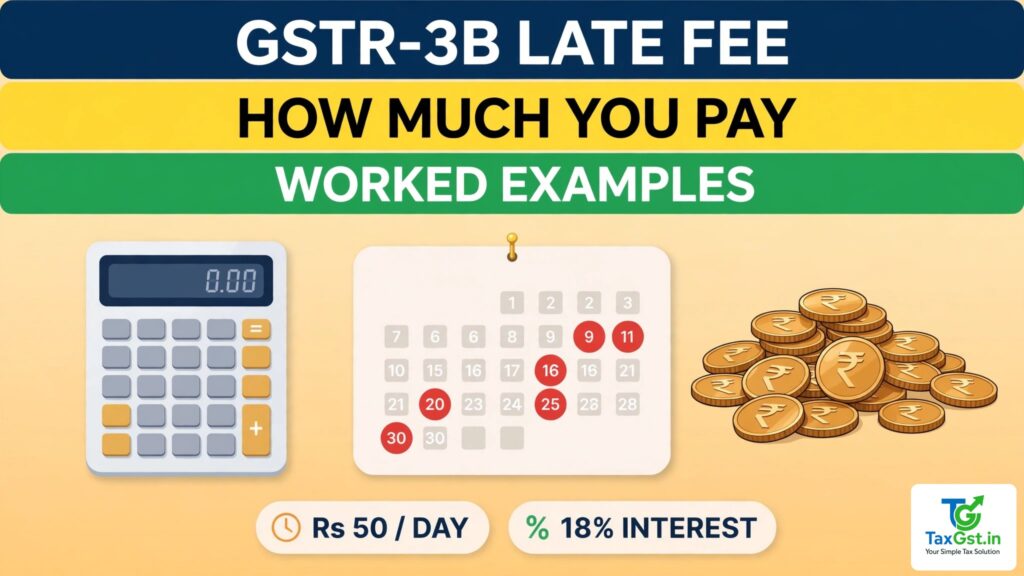
A delayed GSTR-3B costs ₹50 per day of delay (₹20/day for a nil return), capped at ₹5,000 per return — plus 18% per annum interest on the tax paid late, but only on the net cash portion after ITC set-off. The 57th GST Council has recommended waiving the late fee for taxpayers up to ₹5 crore turnover who file within the same month — but it needs a CBIC notification first and interest still applies. Verified October 2026 · TaxGST.in
Every month, thousands of businesses miss the 20th. Sometimes the accountant is on leave, sometimes the books do not close, sometimes you simply forgot. Then the portal shows two ugly additions on your next GSTR-3B: a late fee and interest. Most people pay the number without understanding it — and a few pay more than they should because they never check the caps. This article works out the exact cost with real numbers, and covers the new relief the 57th GST Council has recommended for small taxpayers. For the Council’s full reform package, read our 57th GST Council meeting breakdown; for every filing date, our tax compliance calendar hub.
The late-fee structure, in one table
The late fee is levied under Section 47 of the CGST Act (with matching SGST provisions), at rates notified by the CBIC:
| Situation | Late fee per day of delay | Maximum per return |
|---|---|---|
| GSTR-3B with tax liability | ₹50 (₹25 CGST + ₹25 SGST) | ₹5,000 |
| Turnover up to ₹1.5 crore, with liability | ₹50/day | ₹2,000 |
| Nil GSTR-3B (no outward supply, no tax) | ₹20/day | ₹500 |
| QRMP quarterly GSTR-3B | Same ₹50/day rule | Same caps as above |
Two things people get wrong: first, the “per day” is counted from the day after the due date to the date you actually file — calendar days, not working days. Second, the fee is per return period, so three months of delayed returns attract three separate fees.
The interest: 18% — but only on the cash part
Interest on delayed payment of tax is charged at 18% per annum — and here’s the catch most businesses miss: it applies to the net tax liability paid in cash, i.e. the liability after setting off available input tax credit. If your ₹4,50,000 liability is almost fully covered by ₹4,30,000 of ITC, interest runs only on the ₹20,000 you actually pay late. ITC you had sitting in your credit ledger is not a “delayed payment”.
The formula is simple:
Interest = Net cash tax liability × 18% × (days delayed ÷ 365)
Three worked examples
Example 1: ₹1,20,000 liability, no ITC, 12 days late
A trader files the October GSTR-3B on 1 December instead of 20 November — 12 days late — and pays the full ₹1,20,000 in cash.
- Late fee: 12 days × ₹50 = ₹600
- Interest: ₹1,20,000 × 18% × 12/365 = ₹710
- Total extra cost: ₹1,310
Example 2: ₹4,50,000 liability, ₹4,30,000 ITC, 45 days late
A manufacturer delays the return by 45 days. The fee clock runs on the full delay, but interest runs only on the ₹20,000 net cash payment.
- Late fee: 45 days × ₹50 = ₹2,250
- Interest: ₹20,000 × 18% × 45/365 = ₹444
- Total extra cost: ₹2,694
Notice how the ITC saves ₹9,550 in interest (had the full ₹4,50,000 been cash-delayed, interest alone would have been about ₹9,986). Delaying is expensive; delaying with cash blocked is far worse.
Example 3: nil return, 30 days late
No sales in the month, return filed 30 days late.
- Late fee: 30 days × ₹20 = ₹600 → capped at ₹500
- Interest: nil — no tax was payable
- Total extra cost: ₹500
The lesson: file nil returns anyway. Skipping them does not avoid the fee — it compounds it, month after month, because a blocked return chain freezes your later filings too.
The new 57th Council relief: who it helps, and its limits
The 57th GST Council (8 October 2026) recommended waiving the late fee on a delayed GSTR-3B for taxpayers with turnover up to ₹5 crore in the preceding financial year — provided the return is filed by the end of the month in which it was due. Miss the 20th by a few days, file within the same month, and no late fee accrues.
Read the fine print carefully:
- It is a recommendation, not law yet. It takes effect only after the CBIC issues the notification. Do not assume it covers any return you are filing now — file on time regardless.
- Interest still applies. The waiver covers the late fee only; interest on delayed tax payment runs as before.
- Only for small taxpayers. The ₹5 crore preceding-FY turnover test excludes larger businesses entirely.
- Same-month filing only. A return that spills into the next month falls back to the full ₹50/day regime.
If the notification comes through, the economics of a 5-day slip for a small business change completely: today’s cost of ~₹250 in late fee drops to zero, with only the interest on the cash liability remaining. That is the Council’s trust-first philosophy — the fee is meant to nudge, not to punish a few days of honest delay. For the rest of the trust-era reforms, see our GST refund revamp guide (90% provisional refund in 3 days).
Checklist: keep the late-fee clock from ever starting
- Set a hard internal deadline of the 18th — two days before the 20th statutory date buys you a buffer for portal glitches.
- File nil returns. A nil GSTR-3B takes two minutes and stops the ₹20/day meter.
- Pay cash liability by the due date even if the return data is not final — interest stops the day cash hits the ledger; the return can follow within days.
- Clear old pending returns first. The portal blocks later filings until earlier ones are done, and every blocked month adds its own fee.
- Track every deadline on our tax compliance calendar hub instead of relying on memory.
FAQs
Is the GSTR-3B late fee ₹50 or ₹100 per day?
₹50 per day in total (₹25 CGST + ₹25 SGST) for returns with a tax liability, and ₹20 per day for nil returns. Figures like ₹100/day circulate online because people add CGST+SGST+IGST legs separately or confuse GSTR-3B with other returns.
Is there a maximum cap on the late fee?
Yes — ₹5,000 per return period for regular taxpayers, ₹2,000 for those with turnover up to ₹1.5 crore, and ₹500 for nil returns.
Does interest apply if my liability is fully covered by ITC?
No. Interest runs only on the net cash liability — the portion of tax actually paid late in cash after ITC set-off. If ITC covers the entire liability, there is no delayed payment to charge interest on.
Will the 57th Council late-fee waiver apply to my delayed October return?
Not automatically. The waiver is a Council recommendation awaiting a CBIC notification, and it applies only to taxpayers with up to ₹5 crore preceding-FY turnover who file within the month the return was due. Until notified, the standard ₹50/day fee stands.
Can I pay the late fee in a later month’s return?
No — the late fee and interest for a period must be paid along with that period’s delayed GSTR-3B. The portal will not let subsequent returns through while the liability stands.
Sources
- Section 47, Central Goods and Services Tax Act, 2017 — the statutory framework for late fees on delayed returns; rates (₹50/day standard, ₹20/day nil, caps of ₹5,000 / ₹2,000 / ₹500) as notified by the CBIC from time to time.
- 57th GST Council meeting press release (8 October 2026) — recommended waiver of GSTR-3B late fee for taxpayers with turnover up to ₹5 crore in the preceding financial year, conditional on filing by the end of the month in which the return was due (awaiting CBIC notification; interest unaffected). Reported and analysed in TaxGST.in’s 57th GST Council coverage.
Discover more from TaxGst.in
Subscribe to get the latest posts sent to your email.