
 C.K. Gupta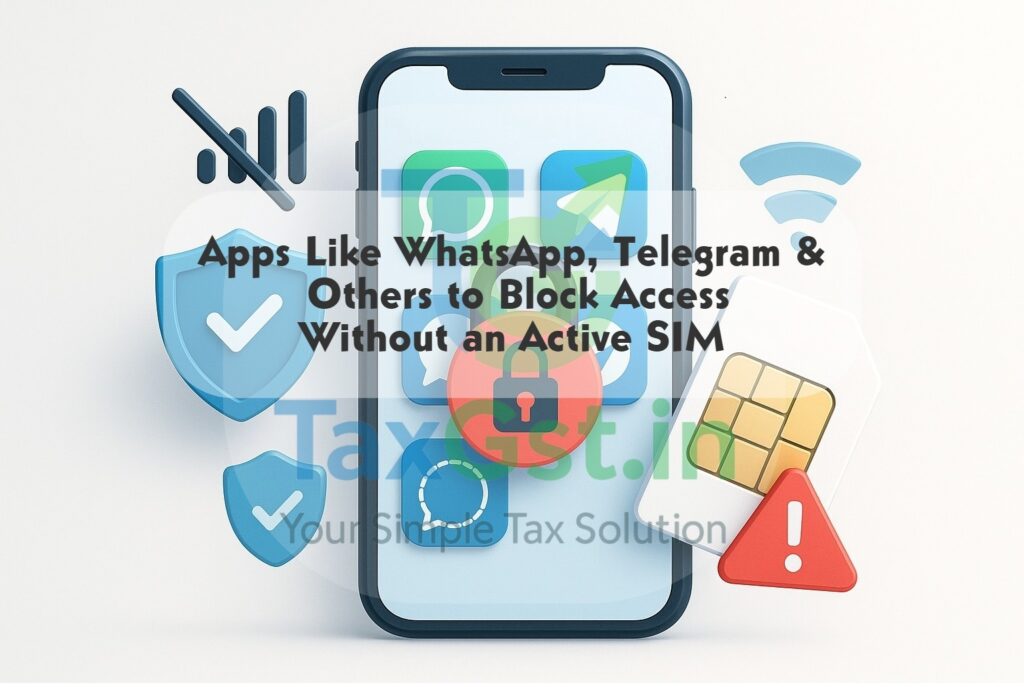
The Indian government has directed popular messaging apps like WhatsApp, Telegram, Signal, Snapchat, ShareChat, JioChat, Arattai and Josh to ensure their services work only with an active SIM card linked to the user’s registered mobile number. This directive from the Department of Telecommunications (DoT), issued on November 21, 2025, under the Telecommunication Cybersecurity Amendment Rules 2025, requires apps to block access if the original SIM is removed, replaced or deactivated. Apps have 90 days to implement these changes, meaning full enforcement starts around February 2026, with compliance reports due within 120 days.
Also Read-New Rent Agreement Rules 2025: What Need To Know for Landlords & Tenants in India
The Department of Telecommunications (DoT) has ordered apps like WhatsApp, Telegram, Signal, and others to block access if the user does not have an active SIM card in their phone.
What is the New Order?
The Government of India is taking aggressive steps to crack down on online scams, “Digital Arrest” frauds, and cybercrime. To achieve this, they have introduced a mandatory requirement known as “SIM Binding.”
Currently, you only need a SIM card once to set up WhatsApp. You receive an OTP, verify the number, and then you can technically remove the SIM card and continue using the app on Wi-Fi. You can even use it on a laptop without touching your phone for days.
- Mandatory Active SIM: Messaging apps must constantly check if the SIM card (linked to your mobile number) is physically present and active in your phone. If you remove the SIM or if it stops working, the app will stop functioning immediately.
- Web Version Logout Every 6 Hours: Many of us use WhatsApp Web on our office laptops for seamless work. Currently, we stay logged in for weeks. The new rule mandates that for security, the web version must automatically log you out every 6 hours. You will have to scan the QR code again using your phone to log back in.
Which Apps Are Affected?
This order is not exclusive to WhatsApp. It applies to almost all major messaging apps operating in India that utilize your mobile number for login and identification. The affected platforms include:
- Telegram
- Signal
- Snapchat
- ShareChat
- JioChat
- Arattai
- Josh
These applications have been given a timeline of 90 days (starting from the order date in late 2025) to implement these technical changes.
Why is the Government Doing This?
You might wonder, “Why make it so difficult for honest users?” The answer lies in the massive rise of financial fraud and cybercrime in India.
Cyber frauds have become a big headache in India, with scammers using messaging apps for phishing, investment scams, digital arrests and loan frauds. Right now, once you register with a mobile number, the app keeps working even if you take out the SIM or deactivate it, letting criminals operate from anywhere without traceability. The DoT says this new “SIM binding” ties every account to a KYC-verified SIM, making it easier for authorities to track misuse through platforms like Sanchar Saathi.
Telecom operators like Airtel, Vodafone Idea and Jio have welcomed the move, calling it a step towards better digital accountability and national security. They point out that one-time verification during signup creates loopholes for fraudsters operating mule accounts or from outside India. This is the first time app-based services using mobile numbers for user ID—classified as Telecommunication Identifier User Entities (TIUEs)—face telecom-like regulation.
The government investigation found a major loophole that criminals were exploiting:
1. The Loophole.
Scammers often procure an Indian SIM card, register on WhatsApp or Telegram, and then discard the SIM or take the device abroad. They continue to use the Indian number over Wi-Fi to scam people in India. Because the SIM is not physically in the phone, it becomes extremely difficult for the police to track their actual location via telecom towers.
2. The Solution.
By forcing the app to check for the SIM card constantly, the government ensures that a verified, physical SIM is present. If a criminal throws away the SIM, their WhatsApp account stops working immediately. This ensures that every active account can be traced back to a physical SIM card, aiding law enforcement agencies.
How Will This Affect You? (The Real Impact).
While this move is intended for national security and fraud prevention, it will create some “hassles” for regular users. Here are the main practical issues you might face:
The “Office Desktop” Disruption.
If you work in a corporate environment and rely on WhatsApp Web to share files or chat with clients, this will be an adjustment. You cannot stay logged in indefinitely. Every 6 hours, the system will force a logout, and you will need to pick up your phone and scan the QR code again to resume work.
International Travel Challenges.
This is a significant concern for travelers. When Indians travel abroad, they often remove their Indian SIM card to avoid high international roaming charges, replacing it with a local Matrix or foreign SIM.
In the future: If you remove your Indian SIM, your WhatsApp linked to that number might stop working because the app cannot detect the SIM card. You may be forced to keep the Indian SIM in the phone (using a dual SIM slot) for the app to function.
Secondary Phones and Tablets.
Many households use an old phone without a SIM card just for WhatsApp (connected via home Wi-Fi). This practice will likely end. If there is no SIM detected in the device, the app will not open.
When Will This Start?
The Department of Telecommunications has provided these companies a 90-day window to update their software and comply with the rules. Users can expect these changes to be implemented around February or March 2026.
This is a strict step by the Indian government to make the digital ecosystem safer. While the 6-hour logout and mandatory SIM presence will be inconvenient for the average user, the authorities believe it is a necessary compromise to curb the rising tide of cybercrime and protect citizens from financial loss.
Frequently Asked Questions (FAQs) on New SIM Binding Rules.
Is it mandatory to keep the SIM card in the phone for WhatsApp now?
Why is WhatsApp Web logging me out every 6 hours?
Will WhatsApp work on Wi-Fi without a SIM card?
When will the new SIM binding rules for messaging apps start?
How will this rule affect international travelers?
Why has the government introduced these strict rules?
Disclaimer: The information provided in this article is for general informational purposes only and is based on the latest available news reports and government directives as of December 2025. While we strive to ensure accuracy, regulations and implementation details may change. This website is not affiliated with the Government of India, the Department of Telecommunications (DoT), or any messaging platform mentioned. Users are advised to refer to official government notifications or consult with legal experts for definitive guidance on compliance and regulations.
References & Official Authorities:
The information in this article is based on the recent directives issued by the Government of India. For verification, please refer to the following official sources and regulations:
- Issuing Authority: Department of Telecommunications (DoT), Ministry of Communications, Government of India.
- Governing Rules: Telecommunication Cybersecurity Amendment Rules, 2025.
- Legal Act: Telecommunications Act, 2023.
- Classification: Messaging apps are now classified as Telecommunication Identifier User Entities (TIUEs).
Related Reading
- Is Telegram Getting Banned in India? The Shocking Truth Behind the Government Probe
- How to Track Your Credit Score/History(CIBIL Score) Using Your PAN Card Via CIBIL, Experian, Equifax, and Others
- Gautam Adani Indicted in US for Bribery: What We Know So Far
Discover more from TaxGst.in
Subscribe to get the latest posts sent to your email.


Never Miss a Tax Deadline Again
Due-date alerts, GST updates and tax tips — free on the app you already use.
event Next: TDS Return (138 / 140) · 31 Oct