
 C.K. Gupta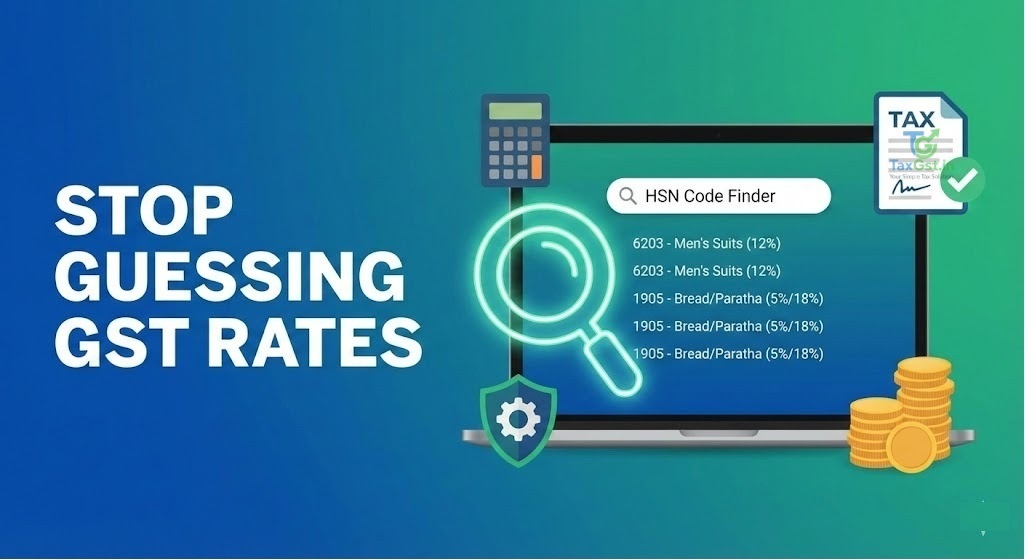
Imagine receiving a tax notice demanding thousands of rupees in penalties simply because you sold a product at 12% tax when the government believes it should have been 18%. It happens more often than you might think. In the world of Goods and Services Tax (GST), a small classification error doesn’t just mess up your paperwork; it directly impacts your cash flow and legal standing.
For business owners and accountants, the Harmonized System of Nomenclature (HSN) isn’t just a list of numbers; it is the language of global trade. Get the translation wrong, and you face blocked input tax credits or hefty fines. Yet, despite the risks, many businesses still rely on “best guesses” or copy what their competitors are doing. This approach is dangerous. Understanding how to classify your goods correctly is the first line of defense against GST litigation. When in doubt, ask a GST expert before you file.
Why Precision Matters for Your Business.
You might wonder why a simple code carries so much weight. The HSN system was developed by the World Customs Organization and is used by over 200 countries. In India, it dictates the GST rate applicable to your product.
If you use an incorrect code, two things happen immediately. First, your invoices become non-compliant. Second, if you are paying a lower tax rate than required, you become liable for the difference plus interest. Conversely, if you pay a higher rate, you might lose customers to competitors charging the correct, lower tax.
Did You Know?
According to recent analysis of GST litigation, nearly 30% of disputes arise purely from classification issues—where the department and the taxpayer disagree on the nature of the product.
This precision is also vital for claiming Input Tax Credit (ITC). If your vendor quotes the wrong HSN code on their invoice, your claim might be rejected by the system during reconciliation. It is a domino effect where one wrong number can topple your entire tax filing chain.
Turning the Search for Codes into a Science.
The challenge most entrepreneurs face is the sheer volume of the code list. The HSN directory covers thousands of products, from live animals to sophisticated machinery. Trying to find your specific item by manually flipping through a PDF or a physical book is not just tedious; it is prone to human error.
Many products sound similar but fall under different tax slabs based on their composition or usage. This is where technology bridges the gap. Instead of manual guesswork, using a dedicated HSN code finder allows you to input a product description and instantly retrieve the correct chapter, heading, and subheading. This small step ensures that the code you print on your invoice aligns perfectly with current GST laws, saving you from future headaches.
Understanding the Digits: How It Works.
Understanding the structure of these codes removes the mystery. An HSN code isn’t random; it is a logical hierarchy.
- The First 2 Digits (Chapter): This represents the broad industry (e.g., “62” for articles of apparel).
- The Next 2 Digits (Heading): This narrows it down to the category (e.g., “6203” for men’s suits).
- The Final 2-4 Digits (Sub-heading): This specifies the material or exact product type.
Reporting Requirements by Turnover.
| Annual Turnover | HSN Digits Required on Invoice |
|---|---|
| Up to ₹5 Crore | 4 Digits (B2B only) |
| Above ₹5 Crore | 6 Digits (B2B and B2B) |
| Import/Export | 8 Digits (Mandatory) |
Knowing how deep you need to go saves you time. Small businesses don’t need to stress over 8-digit precision for domestic sales, but exporters must be exact.
The “Paratha vs. Roti” Dilemma.
To understand why this is tricky, let’s look at a real-world scenario that confused everyone. A famous legal ruling had to decide if a “frozen paratha” is the same as a “roti.”
A plain roti attracts 5% GST. However, the authorities ruled that because frozen parathas require further cooking and contain other ingredients like oil or flour blends, they are “processed food” and attract 18% GST.
If a manufacturer had assumed they were just selling “bread” and used the roti HSN code, they would have faced a massive demand for back taxes. This highlights why looking at the nature and ingredients of your product is crucial before picking a code.
Strategies to Stay Compliant.
Staying updated is difficult because the GST council frequently revises rates and classifications. What was 18% yesterday might be 12% tomorrow.
Relying solely on memory is a bad strategy. You need a reliable ecosystem of information. Platforms like TaxGST.in act as a hub for these updates, helping professionals stay ahead of notifications and circulars. By keeping a close watch on legal updates, you ensure that your accounting software is never out of sync with the law.
Practical Steps to Audit Your Inventory.
You don’t need to wait for a tax officer to knock on your door to fix your codes. You can perform a self-audit today.
Start by exporting your product master list from your billing software. Pick your top 20 revenue-generating items—these are your highest risk areas. Verify their codes against the latest GST tariff list. If you find discrepancies, correct them immediately and issue a debit/credit note if necessary for recent transactions.
Also, talk to your suppliers. If you notice a supplier using a code that seems odd (like a general “others” code), query it. Remember, if they charge you the wrong tax, your credit is at risk.
Compliance is not a one-time task; it is an ongoing habit. By integrating the right tools and habits into your workflow, you transform tax filing from a monthly panic into a routine process.
- Verify Automated Entries: Don’t blindly trust your ERP software; spot-check new product entries.
- Use Digital Tools: Always cross-reference new items with a code finder rather than guessing.
- Train Your Team: Ensure your sales and billing staff understand the importance of selecting the right product category.
- Monitor Changes: Set alerts for GST council meeting updates that might affect your industry.
Taking these steps protects your profits and keeps your business reputation intact with the tax authorities.
Frequently Asked Questions (FAQs) on HSN Codes & GST Compliance.
Is it mandatory to put HSN code in GST invoice?
What is the penalty for wrong HSN code in GST?
How do I find the correct HSN code for my product?
What is the difference between HSN and SAC codes?
Do I need 4, 6, or 8 digits for my HSN code?
- 4 Digits: For turnover up to ₹5 Crore (B2B only).
- 6 Digits: For turnover above ₹5 Crore (All invoices).
- 8 Digits: Mandatory for all Import and Export transactions, regardless of turnover.
Can my Input Tax Credit (ITC) be rejected due to wrong HSN?
What if my product has multiple HSN codes?
Can I change the HSN code if I realize it is wrong?
Disclaimer: The information provided in this article and FAQ section is for general educational purposes only and does not constitute legal or financial advice. GST laws and HSN classifications are subject to frequent updates by the GST Council. Please consult a qualified Chartered Accountant (CA) or tax professional before making any binding business decisions.
Related Reading
- Clarification on GST Payments for Co-Insurance Premiums and Reinsurance Commissions
- Received a GST Notice (DRC 01B) for Mismatch in GSTR-2A/2B and GSTR-3B? Here’s How to Respond
- What Are the Documents and Information Required to File GST Returns?
Try the free GST calculator for instant figures.
Discover more from TaxGst.in
Subscribe to get the latest posts sent to your email.


Never Miss a Tax Deadline Again
Due-date alerts, GST updates and tax tips — free on the app you already use.
event Next: TDS Return (138 / 140) · 31 Oct