
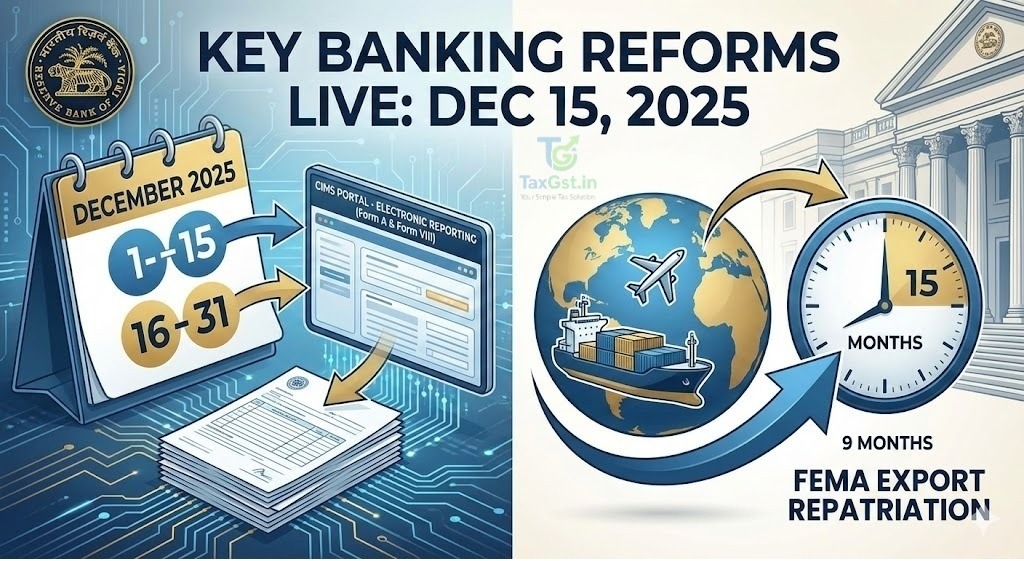
The Government of India has officially notified December 15, 2025, as the enforcement date for a series of coordinated amendments to banking regulations, marking a pivotal shift toward modernizing compliance frameworks and enhancing financial stability. Spearheaded by the Reserve Bank of India (RBI), these reforms—introduced through multiple amendment directions in late 2025—standardize critical operational definitions, streamline reporting mechanisms, and reinforce digital governance across Local Area Banks, Payments Banks, Small Finance Banks, and Regional Rural Banks (RRBs).
A cornerstone of the reforms is the redefinition of “fortnight” for Cash Reserve Ratio (CRR) and Statutory Liquidity Ratio (SLR) calculations. Replacing the outdated Saturday–Friday cycle, the new definition aligns with calendar periods: 1st–15th or 16th–last day of the month. This change eliminates ambiguity in compliance timelines and ensures uniformity in liquidity reporting across all bank categories.
The amendments also mandate electronic submission of Form A (CRR) and Form VIII (SLR) via the RBI’s Centralized Information Management System (CIMS), reinforcing the shift toward paperless, real-time regulatory oversight. These updates are part of a broader regulatory modernization effort aimed at aligning India’s banking sector with global best practices while ensuring resilience and transparency.
“The definition of ‘fortnight’ shall now mean either the 1st–15th or 16th–last day of the month.”
— RBI (Payments Banks – CRR and SLR) Amendment Directions, 2025
Legal Framework and Regulatory Authority.
The amendments derive their authority from Sections 18 and 24 of the Banking Regulation Act, 1949, which empower the RBI to prescribe CRR and SLR requirements. The RBI has operationalized the changes through subordinate legislation—specifically, the Amendment Directions, 2025—issued separately for each bank category:
- Payments Banks (under Section 22)
- Small Finance Banks (under Section 22A)
- Regional Rural Banks (under Section 31A)
- Local Area Banks (under Section 22B)
These directions were notified in the Gazette of India on December 8, 2025 (for Small Finance Banks) and December 15, 2025 (for Payments Banks, RRBs, and Local Area Banks), ensuring synchronized implementation. The legal basis for digital reporting is anchored in Section 46(1A) of the Act, which mandates electronic filings, while Section 46(4) provides for penalties in case of non-compliance.
In parallel, the FEMA (Amendment) Regulations, 2025, issued under Section 47 of the Foreign Exchange Management Act, 1999, extend the export proceeds repatriation period from 9 to 15 months, effective immediately upon the banking reforms’ enforcement. This change, notified via FEMA 23(R)/(7)/2025-RB, addresses supply chain delays and working capital constraints, particularly for MSMEs.
Key Regulatory Changes at a Glance.
| Reform Area | Old Rule | New Rule (w.e.f. Dec 15, 2025) | Applicable To |
|---|---|---|---|
| Fortnight Definition | Saturday–Friday cycle | 1st–15th or 16th–last day of month | All banks (CRR/SLR) |
| Reporting Deadline | Varies by bank | 7 days after fortnight ends | All banks |
| Submission Mode | Manual/physical | Electronic (via CIMS) | All banks |
| Export Repatriation | 9 months | 15 months | Exporters (FEMA) |
The new fortnight definition ensures predictable reporting windows. For example, the first CRR report for January 2026 will cover January 1–15, with submission due by January 22. This predictability aids liquidity planning, especially for banks with limited treasury teams.
Electronic reporting eliminates manual errors and delays. Banks must now:
– Submit Form A (CRR) and Form VIII (SLR) within 7 days of the fortnight’s end.
– Maintain an audit trail with timestamped digital submissions.
– Face penalties under Section 46(4) for late or incorrect filings.
The 15-month export repatriation window allows exporters to file Form XOS with the RBI by the 15th month, with exemptions requiring prior approval. This reform supports export-led growth, particularly in sectors like textiles, pharmaceuticals, and agri-products.
Sector-Specific Implications.
Local Area Banks & Small Finance Banks.
The revised CRR/SLR framework brings these institutions closer to commercial banking standards, reducing regulatory arbitrage. The calendar-aligned fortnight simplifies compliance, while the extended export window aids trade-financing activities. Legal clarity is ensured through explicit recognition of the new definition in Section 18 of the Banking Regulation Act, 1949.
Payments Banks.
As digital-first entities, Payments Banks benefit from predictable reporting cycles but face stricter enforcement of electronic submissions. Real-time integration with CIMS is critical to avoid disruptions in instant payment services. Penalties for non-compliance have been tightened under Section 46(4).
Regional Rural Banks (RRBs).
RRBs, vital for rural financial inclusion, gain from simplified reporting norms. However, many lack automated systems. To bridge this gap:
- The RBI has mandated a 30-day transition period for system upgrades.
- Nodal officers will provide technical support.
- The NPCI will conduct workshops on digital submission protocols.
“The harmonization of CRR/SLR reporting across bank categories is a pragmatic step, but smaller banks will need hand-holding to adapt.”
— RBI Internal Working Group Report, 2024
Compliance Timeline and Transition Support.
To ensure a smooth transition, the RBI has issued the following guidelines:
- System Upgrades: Complete by November 30, 2025.
- First Reporting Cycle: December 1–15, 2025, with submissions due by December 22, 2025.
- Transition Window: 30 days (until January 14, 2026) for testing and troubleshooting.
- Penalties: Up to ₹5 lakh for violations under Section 46(4).
The RBI has also mandated nodal officers to assist smaller banks, particularly RRBs and Payments Banks, with technical guidance. Proactive engagement with the RBI helpdesk is strongly advised.
“The 30-day transition period is critical for banks to test their systems and ensure seamless compliance. Proactive engagement with RBI’s helpdesk is strongly recommended.”
— RBI Circular No. RBI/2025-26/XX, December 1, 2025
Expert Insights: Stability, Innovation, and Challenges.
The reforms strike a balance between regulatory rigor and operational flexibility. Key advantages include:
– Reduced compliance errors due to standardized fortnight cycles.
– Enhanced transparency through digital reporting.
– Improved liquidity planning for banks of all sizes.
However, challenges remain:
– IT infrastructure costs may strain smaller banks.
– Workforce adaptation requires targeted training.
– Penalty risks necessitate robust internal controls.
The reforms also create opportunities for fintech innovation, such as AI-driven compliance tools and cloud-based reporting platforms. The alignment with SEBI’s net worth rules for merchant bankers (effective December 2025) signals a broader push toward cross-sectoral financial resilience.
Impact on Taxpayers and Businesses.
The amendments will have tangible benefits for taxpayers and businesses:
– Standardized reporting reduces operational friction for banks, indirectly lowering compliance costs.
– Extended export repatriation (15 months) eases working capital pressures for exporters, reducing the risk of forex-related penalties.
– Digital reporting enhances transparency, improving audit outcomes and investor confidence.
Stakeholders are advised to:
– Update internal systems to reflect the new fortnight definition.
– Train staff on electronic submission protocols.
– Leverage the transition window to test and refine compliance workflows.
These reforms represent a proactive, technology-driven approach to financial regulation—balancing stability with innovation, and clarity with flexibility. As India’s banking ecosystem evolves, timely adaptation will be key to maximizing the benefits of this landmark regulatory overhaul.
Frequently Asked Questions (FAQs) on RBI Banking Reforms Dec 2025.
What is the new definition of “fortnight” for CRR/SLR reporting?
When is the effective date for the new RBI banking amendments 2025?
What is the new time limit for export proceeds repatriation under FEMA?
Which banks must file CRR/SLR on the CIMS portal?
What is the deadline for submitting CRR and SLR returns?
Are there penalties for late filing of Form A or Form VIII?
Disclaimer: This content is for informational purposes only and based on the RBI notifications available as of December 2025. It does not constitute legal or financial advice. Please consult the official RBI website or a qualified professional for compliance.
Official References & Authority Links
For verification of the circulars and acts mentioned in this article, please refer to the following official government resources:
- RBI Official Notifications:
Reserve Bank of India – Notifications Repository - Gazette of India (e-Gazette):
Official Gazette of India Search (egazette.gov.in) - FEMA Regulations (RBI):
Foreign Exchange Management Act (FEMA) Regulatory Updates - Banking Regulation Act, 1949 (Legislative Department):
Ministry of Law & Justice – Legislative Acts - RBI CIMS Portal (CIMS):
RBI Centralised Information Management System (Login Page)
Discover more from TaxGst.in
Subscribe to get the latest posts sent to your email.




Stay Updated!
Join our community for latest tax updates, GST news & finance tips