
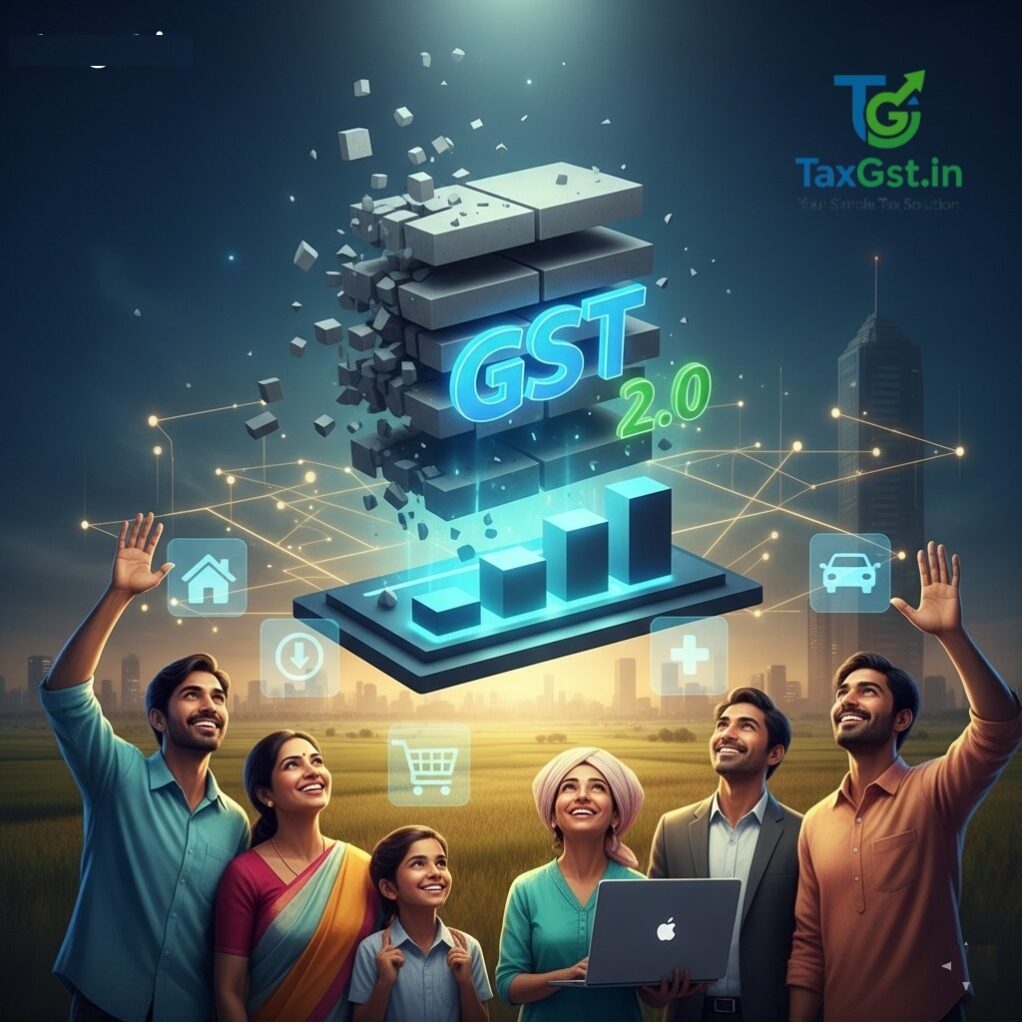
The 56th GST Council Meeting on September 3, 2025, wasn’t just another policy update; it was the dawn of what many are calling “GST 2.0.” The decisions made in New Delhi signal a major change in direction for India’s tax system. The initial years of GST were about getting the system up and running. Now, the focus is shifting to smarter, people-first reforms. The goal is simple: make GST a system that helps businesses grow while also making life easier and more affordable for the average Indian.
Also Read-India’s New GST 2.0 Reform: New GST Rates from September 22, 2025
The biggest change is a complete redesign of the tax slabs. The old, confusing four-rate structure is being scrapped for a much simpler system. Along with this, the Council has announced a wave of tax exemptions and rate cuts on everything from insurance policies to daily groceries. These are not small tweaks; they are foundational changes. In this article, we’ll break down what these decisions mean for your wallet, your business, and the country’s economy.
Summary of Recent GST Changes (Effective Sept 22, 2025).
What’s Cheaper? (Moved to lower tax slabs).
- Daily Essentials: Soaps, shampoos, toothpaste, and hair oil now at 5% (from 18%).
- Food Items: Packaged namkeens, bhujia, pasta, and chocolates reduced to 5%.
- Household Goods: Utensils, bicycles, and kitchenware are now taxed at 5%.
- Consumer Durables: TVs, ACs, and dishwashers have moved from 28% to 18%.
- Automobiles: Small cars and two-wheelers (up to 350cc) are now at 18% (from 28%).
- Farming & Agriculture: Tractors, sprinklers, and other machinery are now at 5%.
What’s Costlier? (Moved to higher tax slabs)
- Sin Goods: A new 40% slab applies to pan masala, tobacco, and cigarettes.
- Beverages: Aerated and caffeinated drinks now fall under the 40% slab.
- Luxury Items: High-end cars and other luxury goods are now taxed at 40%.
- Coal: The GST rate on coal has been increased from 5% to 18%.
New Exemptions (No GST).
- Insurance: Individual health and life insurance premiums are now exempt from GST.
- Essential Food: UHT milk, paneer, and all Indian breads are now tax-free.
- Education: Exercise books, notebooks, pencils, and sharpeners are now exempt.
The New GST Architecture: A Simpler Three-Rate Structure.
The single biggest change announced by the 56th GST Council is the move away from the four-tier tax structure of 5%, 12%, 18%, and 28%. This is being replaced by a straightforward three-rate system that’s easier for everyone to understand and follow.
Here is the new structure:
- A Merit Rate of 5%: This rate is for essential goods and services, making sure that items people use every day remain affordable.
- A Standard Rate of 18%: This will be the main rate for most goods and services, combining the old 12% and 18% slabs into one.
- A De-merit Rate of 40%: This new, higher rate is for a small number of items considered “sin” or luxury goods. The old 28% slab is gone, with items either moving down to 18% or up to this new 40% rate.
This isn’t just about making things simpler. It’s a smart economic move. Now, you might think that moving items from 12% to the new 18% rate would cause prices to rise. The Council thought of that. To balance it out, they have drastically cut taxes on many high-value items that people buy, like cement, TVs, air conditioners, and small cars, bringing them down from 28% to 18%. This is expected to make big-ticket items cheaper, encouraging people to spend and giving a major boost to manufacturing and construction. The thinking is that the money people save on these big purchases will stimulate the economy more than the price increases on other items will slow it down, creating a net positive effect.
The following table shows the difference between the old and new GST rates:
| Old GST Rate Slab | Key Goods/Services Covered | New GST Rate Slab | Key Goods/Services Covered |
|---|---|---|---|
| 5% | Mass consumption items | 5% (Merit Rate) | Essentials, common man items |
| 12% | Processed foods, etc. | 18% (Standard Rate) | Most goods and services |
| 18% | Most goods and services | ||
| 28% | Luxury/Sin goods | 40% (De-merit Rate) | Select luxury/sin goods |
Major Relief for the Common Citizen: What’s Getting Cheaper.
One of the clearest messages from the 56th GST Council meeting was a focus on real, practical savings for ordinary people. The Council has used tax policy to lower the cost of living and make essential services more affordable.
A Shield of Security: No More GST on Health and Life Insurance.
In a huge move, the Council has completely removed GST from all individual life insurance policies (term, ULIP, and endowment plans) and their reinsurance. The same goes for all individual health insurance policies, including family and senior citizen plans, which are now also exempt from GST.
This is more than a tax cut; it’s a clear signal that tax policy is being used to improve social security. These policies used to have an 18% GST, which made them too expensive for many families. By scrapping this tax, the government is tackling the problem of high medical costs and encouraging more people to get insured. This is a huge benefit for the middle class and anyone working to build a secure future for their family.
Healthcare and Medicines: A Prescription for Lower Costs.
The Council has also made sweeping cuts across the healthcare sector to bring down the cost of medicines and medical devices:
- NIL Rate for Lifesaving Drugs: GST has been completely removed from 36 critical life-saving drugs. This includes 33 drugs that were at 12% and 3 drugs (for cancer, rare diseases, and chronic illnesses) that were at 5%.
- Lower Rate for All Other Medicines: All other medicines will now be taxed at a much lower rate of 5%, down from 12%.
- Medical Devices and Supplies: Many common medical supplies like bandages, gauze, diagnostic kits, and glucometers will now have a lower GST of 5%, down from 12% or 18%.
From the Kitchen to the Bathroom: Rate Cuts on Daily Household Items.
To help with the monthly budget, the Council has cut GST on many daily-use products. Items like hair oil, soap, shampoo, toothpaste, and toothbrushes, which were taxed at 18%, will now be in the 5% slab. Tableware, kitchenware, and other household articles will also see their rates drop to 5%.
Your Food Basket Just Got Lighter.
The Council has announced major GST cuts on everyday food items:
- NIL Rate on Staples: UHT milk and pre-packaged, labelled paneer are now exempt from GST, down from 5%. In another big relief, all Indian breads, including chapati, roti, paratha, and parotta, will have zero GST.
- 5% Rate on Packaged Foods: GST on a huge range of packaged foods has been brought down to 5%. This includes popular items like packaged namkeens, bhujia, sauces, pasta, instant noodles, chocolates, coffee, butter, and ghee, which were earlier taxed at 12% or 18%.
Here’s a quick look at some of the biggest changes for your household:
| Category | Item Examples | Old GST Rate | New GST Rate |
|---|---|---|---|
| Insurance | Individual Health & Life Insurance | 18% | NIL |
| Essential Dairy | UHT Milk, Pre-packaged Paneer | 5% | NIL |
| Staples | Roti, Chapati, Paratha | 5%/18% | NIL |
| Medicines | 36 Lifesaving Drugs | 12%/5% | NIL |
| Other Medicines | All other drugs | 12% | 5% |
| FMCG (Personal) | Soap, Toothpaste, Shampoo, Hair Oil | 18% | 5% |
| FMCG (Food) | Packaged Namkeens, Butter, Ghee, Chocolates | 18%/12% | 5% |
A Closer Look at the Sectors: Rate Changes for Goods.
The GST Council’s changes were carefully planned to boost important sectors of the economy, support industries that create jobs, and fix long-standing tax problems.
Automobile and Transport Sector.
The auto sector gets a major tax overhaul. Small cars (petrol engines ≤ 1200 cc and length ≤ 4000 mm; diesel engines ≤ 1500 cc and length ≤ 4000 mm), motorcycles up to 350 cc, three-wheelers, buses, trucks, and ambulances all get a big tax cut from 28% to 18%. On the other hand, larger cars and motorcycles over 350 cc will now be in the new 40% de-merit slab.
But the most important change for the industry is the new uniform GST rate of 18% on all auto parts, regardless of their HSN code. This is a game-changer. For years, the auto parts industry was stuck in arguments with tax authorities over whether a part should be taxed at 18% or 28%. This confusion led to expensive legal battles and uncertainty. By making the rate the same for all parts, the Council has ended this problem. This will mean lower compliance costs, fewer legal risks, and a simpler supply chain for everyone from manufacturers to local mechanics.
Construction and Real Estate.
In a move that will give a big push to the construction and real estate industries, the GST Council has cut the rate on cement from 28% to 18%. Cement is a basic need for any construction, and this 10% tax cut will bring down the cost of building projects. This will help affordable housing, support infrastructure development, and could help revive the real estate market.
Agriculture and Farming.
The farm sector has also received a lot of support. GST on tractors and a variety of farm machinery—for preparing soil, cultivation, and harvesting—has been cut from 12% to 5%. The Council also fixed the “inverted duty structure” problem in the fertilizer industry by cutting GST on key chemical inputs like Sulphuric acid, Nitric acid, and Ammonia from 18% to 5%.
Textiles and Apparel.
The textile industry, which employs millions and is a key part of ‘Make in India‘, has received a much-needed fix. The Council has corrected the inverted duty structure for man-made fibre by cutting GST on the fibre from 18% to 5% and on man-made yarn from 12% to 5%. An inverted duty structure is when the tax on raw materials is higher than the tax on the final product. This was a major problem for the domestic industry, as it led to blocked working capital from unused Input Tax Credit (ITC) and made Indian products more expensive than imports. This change solves the ITC issue and gives a direct boost to local textile manufacturing.
Consumer Electronics and Durables.
There’s good news for anyone planning to buy electronics. The Council has moved several popular items out of the highest tax slab. The GST rate on all television sets (including LCD and LED), air-conditioners, and dishwashing machines has been cut from 28% to 18%.
The 40% De-Merit Rate: What’s Getting More Expensive.
The new 40% de-merit rate has two main goals. First, it will bring in more revenue from items that people tend to buy regardless of the price, which helps make up for the tax cuts on other goods. Second, by calling it a “de-merit” rate, the government is sending a clear message by heavily taxing items it considers unhealthy or luxury goods.
Here are the goods and services that will now be in the 40% tax bracket:
| Category | Specific Goods / Services | Old GST Rate | New GST Rate |
|---|---|---|---|
| Tobacco Products | Pan Masala, Cigarettes, Unmanufactured Tobacco, Chewing Tobacco, etc. | 28% | 40% |
| Beverages | Aerated Waters with added sugar, Caffeinated Beverages, Other non-alcoholic beverages | 28%/18% | 40% |
| Luxury Vehicles | Cars >1200cc (Petrol) or >1500cc (Diesel) or >4m length, Motorcycles >350cc, Personal Aircraft, Yachts | 28% | 40% |
| Actionable Claims | Betting, Casinos, Gambling, Horse Racing, Lottery, Online Money Gaming | 28% | 40% |
| Other Goods | Revolvers & Pistols, Smoking Pipes & Cigar Holders | 28% | 40% |
| Services | Admission to Casinos/Race Clubs, Licensing of Bookmakers, Leasing of 40% goods | 28% | 40% |
Changes in Services Taxation: What You Need to Know.
The services sector, which is a huge part of India’s economy, also saw major changes that will benefit both consumers and businesses.
Key changes include:
- Hospitality and Transportation: GST on hotel rooms with a tariff up to Rs. 7,500 per day has been cut from 12% with ITC to 5% without ITC, making travel cheaper. Various transport services, including passenger transport and Goods Transport Agencies (GTA), have also been adjusted to the new 18% standard rate, with a 5% option available in some cases.
- Job Work and Professional Services: To help manufacturers, job work services for sectors like pharma, leather goods, and printing have been moved to the 5% slab. However, other job work services not specified elsewhere will now be taxed at the standard 18% rate, up from 12%.
- Wellness and Lifestyle: In a big relief for many, beauty and wellness services—including those from gyms, salons, barbers, and yoga centres—will see their GST rate fall from 18% with ITC to 5% without ITC.
Making Business Easier: A Look at Procedural Reforms.
Beyond just changing rates, the GST Council has introduced several procedural changes to make it easier to do business in India.
Faster Refunds, Better Cash Flow.
Delayed refunds have been a major headache for businesses, especially small and medium ones, as it ties up their money. To fix this, the Council has approved a new system for risk-based approval of 90% provisional refunds for both exports and claims from Inverted Duty Structure (IDS). This is a big shift from a “check everything first” approach to a “trust and refund first” model for most honest taxpayers. The system will automatically process 90% of the refund, and only high-risk cases will be held for detailed checks. This should free up a lot of working capital for businesses.
A Simpler Way to Get into GST.
To help small businesses join the formal economy, a new optional simplified GST registration scheme is being introduced. This will allow low-risk applicants to get their registration automatically within three working days. This is expected to help about 96% of new applicants and make getting a GSTIN much faster and easier.
A New System for Resolving Disputes.
The Council has set a clear timeline for the launch of the Goods and Services Tax Appellate Tribunal (GSTAT). The tribunal will start accepting appeals by the end of September 2025 and will begin hearings before the end of December 2025. The GSTAT will be a specialized body for handling GST disputes, which will reduce the load on higher courts and provide faster resolutions for taxpayers.
Clarity for Service Exporters.
In a small but very important change, the Council has recommended changing the place of supply rules for “intermediary services” under the IGST Act. The old rules were confusing and often meant that Indian service providers (like ITES, BPO, and consulting firms) couldn’t get export benefits, making them less competitive. The new rule clarifies that the place of supply is the location of the person receiving the service. This ensures these services are treated as exports, allowing providers to claim refunds on their input taxes and compete fairly in the global market. This one change could unlock huge potential for India’s service export industry.
Key Dates to Remember.
The GST Council has provided a clear timeline for these historic changes:
- September 22, 2025: This is when the new GST rates for all services and most goods will take effect.
- November 1, 2025: Key procedural changes, like the risk-based provisional refund system and the simplified registration scheme, will be launched.
- September & December 2025: These are the key dates for the GSTAT, which will accept appeals by the end of September and start hearings by the end of December.
- Date to be Notified: The new rates for some tobacco products and pan masala will be announced later, after the compensation cess loan and interest payments are fully cleared.
Conclusion: The Road Ahead for GST 2.0.
The decisions from the 56th GST Council Meeting are more than just minor adjustments; they are a bold and complete overhaul of India’s tax system. The move to a simpler three-rate structure, the strong focus on relief for the common person, the fixing of long-standing tax problems, and the introduction of trust-based procedures all signal the arrival of GST 2.0.
The path forward is toward a simpler tax system that is less of a burden for both families and businesses. These reforms are set to improve cash flow for companies with faster refunds, reduce legal disputes with clearer rules, and create a more efficient tax system. By balancing the government’s finances with economic stimulus and citizen welfare, these next-generation reforms are building the foundation for a mature, stable, and truly ‘Good and Simple’ tax for India.
Disclaimer:
The information provided in this article is for general informational purposes only and is based on the press release from the 56th GST Council Meeting. All information is provided in good faith; however, we make no representation or warranty of any kind, express or implied, regarding the accuracy, adequacy, validity, reliability, availability, or completeness of any information. The recommendations are subject to change through relevant circulars, notifications, and law amendments, which will have the force of law. This article should not be considered as legal or financial advice. Readers are advised to consult with a qualified tax professional for advice tailored to their specific situation and refer to official government notifications for the final legal provisions.
Discover more from TaxGst.in
Subscribe to get the latest posts sent to your email.

Stay Updated!
Join our community for latest tax updates, GST news & finance tips