
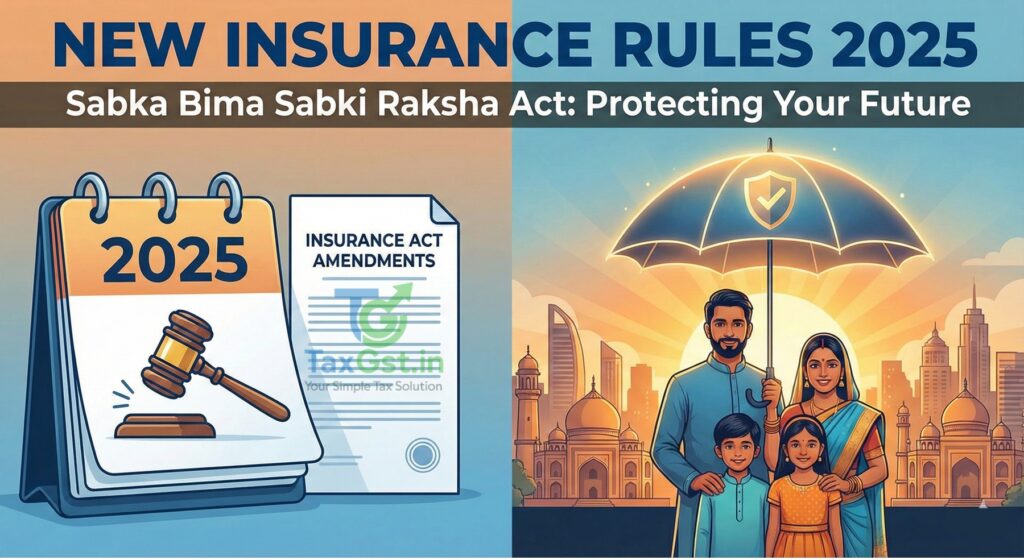
Have you ever felt that insurance in India is too complicated, too expensive, or just not designed for your specific needs? You are not alone. For decades, many Indians have viewed insurance merely as a tax-saving tool to submit to HR in March, rather than a real safety net for their families. But 2025 is marking a massive turning point in this mindset.
In December 2025, the Parliament passed a historic piece of legislation: the Sabka Bima Sabki Raksha (Amendment of Insurance Laws) Act, 2025. Having received Presidential assent on December 20, 2025, this isn’t just another minor rule change; it is a complete overhaul of how insurance works in our country. It updates age-old laws like the Insurance Act of 1938 and the LIC Act of 1956 to fit the modern digital era.
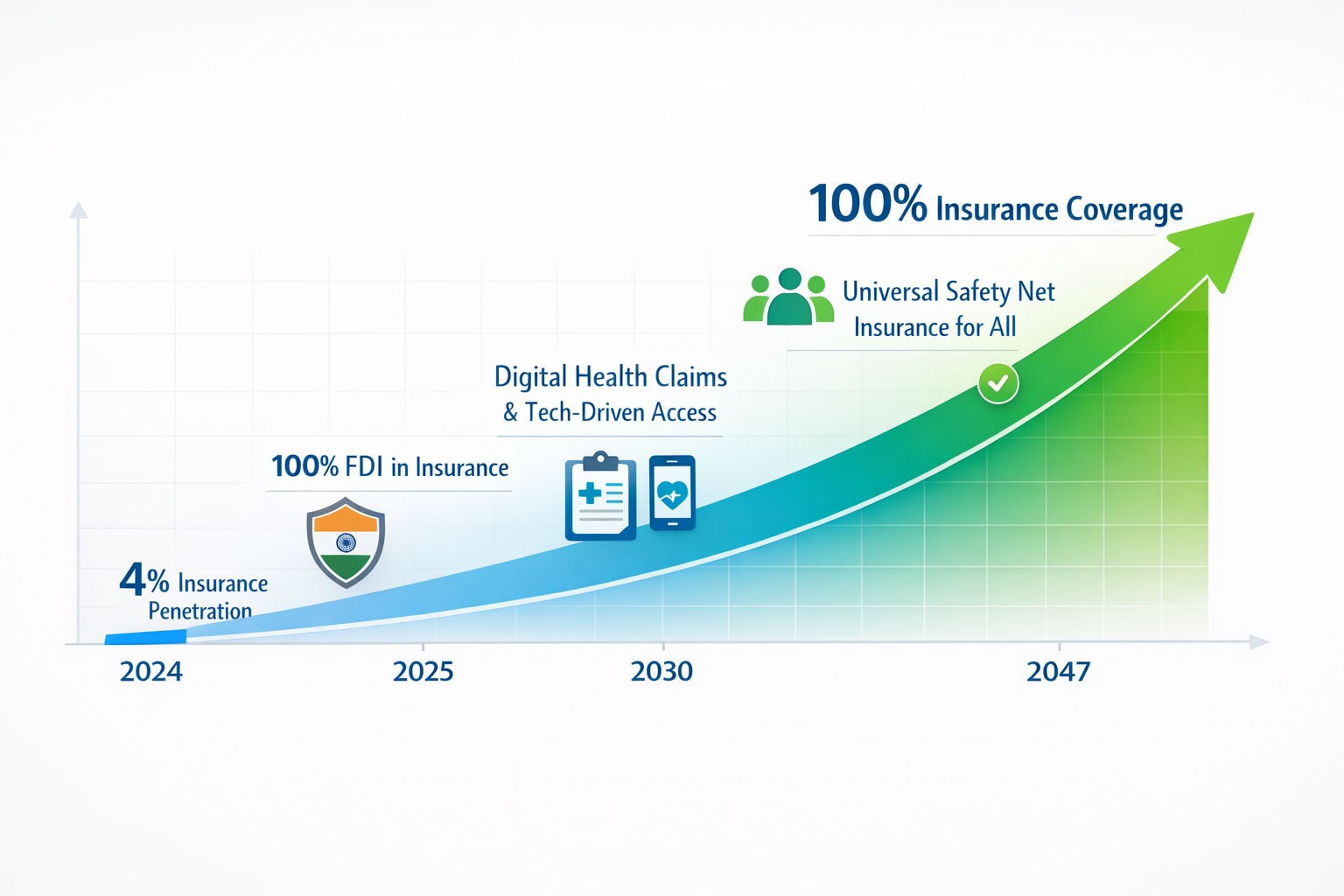
As per PIB releases, the government’s clear vision is “Insurance for All by 2047″—aligning with the goal of a Viksit Bharat (Developed India). Currently, insurance penetration in India is around 4% of GDP. The idea is simple but ambitious: every Indian, from a farmer in a remote village to a tech worker in a metro, should have financial protection against life’s uncertainties. The government wants to shift insurance from being a product that is “sold” to one that is “demanded” by aware citizens.
But what do these big legal terms mean for your wallet, your job, and your peace of mind? As a financial blogger for Taxgst.in, I have analyzed the fine print of this new Act to explain the New Insurance Rules 2025 in simple English. Let’s dive deep into how this law changes the game for you.

Key Changes in the Sabka Bima Sabki Raksha Act.
The new Act amends older laws to remove outdated hurdles and introduce modern safeguards. The goal is to modernize the sector, attract money, and protect the common man. Here are the biggest changes you need to know about.
1. More Foreign Players: 100% FDI Allowed.
For years, there was a limit on how much foreign money (Foreign Direct Investment or FDI) could be invested in Indian insurance companies. The limit was capped at 74%. As per the new provisions in the Sabka Bima Sabki Raksha Act, this limit has been increased to 100% FDI.
What this means in simple terms: Global insurance giants can now fully own and operate companies in India without needing an Indian partner. This is significant because it opens the doors for massive international investment. But it’s not just about money; it’s about expertise. Global companies bring advanced “risk models” (ways to calculate premium) that are often more accurate and fair.
Furthermore, this move is expected to generate jobs. As per statements in the Parliament, employment in the insurance sector has already tripled in the last decade. With 100% FDI, new offices, new branches, and new digital teams will be hired, creating thousands of opportunities for Indian youth.
| Feature | Old Rule (Before Dec 2025) | New Rule (Under 2025 Act) |
|---|---|---|
| FDI Limit | 74% (Indian partner required) | 100% (Full foreign ownership allowed) |
| Impact | Limited competition and technology. | More competition, better tech, and more jobs. |
2. Stronger Watchdog to Protect You (IRDAI).
The Insurance Regulatory and Development Authority of India (IRDAI) is the referee of the insurance game. Until now, the referee had limited cards to show. The new Act gives this referee much stronger powers to punish bad players.
As per PRS India analysis of the bill, the Act empowers IRDAI to take stricter action against companies that misbehave. The penalties for breaking rules have been rationalized and increased significantly, with caps raised to ₹10 Crore for serious violations.
- Disgorgement of Profit: This is a powerful new tool. If an insurer makes a profit by cheating customers or breaking rules, IRDAI can now order them to “disgorge” (vomit out) that profit. This removes the incentive to cheat.
- Policyholders’ Education & Protection Fund: The money collected from these penalties won’t just go into the government treasury. A dedicated fund is being set up specifically to educate customers like you and protect your interests.
“The focus of the new amendments is squarely on the policyholder. We want to ensure that trust in the insurance sector grows, and consumers feel secure knowing the regulator has teeth.” – Source: Finance Ministry officials during the bill discussion.
3. LIC Gets More Freedom to Compete.
The Life Insurance Corporation of India (LIC) is a household name, trusted by millions. However, being a government entity often meant it had to jump through bureaucratic hoops that private companies didn’t. The new Act amends the LIC Act of 1956 to give the state-owned giant more operational autonomy.
This means LIC can now make faster decisions regarding its products, agents, and office expansions without waiting for lengthy government approvals for every small step. For you, this means LIC might soon launch more modern, competitive products (like better ULIPs or term plans) that can go toe-to-toe with private players.
4. Easier Entry for Reinsurers (The Safety Net’s Safety Net).
Think of “reinsurance” as insurance for insurance companies. When an insurance company takes on a huge risk (like insuring a massive factory, a satellite, or thousands of homes against floods), they buy insurance from a bigger “reinsurer” to share that risk. If reinsurers are scarce, your premiums go up.
As per the Act, the Net Owned Fund (NOF) requirement for foreign reinsurers to set up shop in India has been reduced drastically from ₹5000 crore to ₹1000 crore. This lowering of the entry barrier will attract more global reinsurers to India. When the “backend” risk is managed better and cheaper, the “front-end” premium you pay for your car or home insurance can stabilize or even decrease.
5. Your Data is Safer and “Health” is Priority.
In today’s digital world, your health and financial data are sensitive. The new insurance changes in 2025 align the insurance sector with the Digital Personal Data Protection (DPDP) Act, 2023. Insurance companies now have strict legal obligations to keep your personal data private. They cannot share your medical history with third parties without your explicit consent.
Additionally, the Act formally recognizes “Health” as a distinct class of insurance business. This paves the way for specialized health insurance companies to emerge that focus only on health, potentially offering better products than general insurers who sell everything from car to crop insurance.
How These New Insurance Rules Affect You Directly.
It’s easy to get lost in the technical details of an Act. Let’s look at practical scenarios of how these changes impact the “Aam Aadmi” in daily life.
Scenario 1: Better Products and Lower Premiums for Priya.
Imagine Priya, a 28-year-old freelance graphic designer in Mumbai. She doesn’t have a corporate health plan. Previously, she found individual health plans expensive with limited coverage for modern treatments.
With 100% FDI, major global players will enter India. They will compete for Priya’s business. When companies compete, two things usually happen: prices go down, and product quality goes up. Priya might soon find international-standard health plans that cover mental health, OPD visits, and global treatments at a more affordable premium, thanks to the new competition.
Scenario 2: Faster and Fairer Claims for Farmer Ramesh.
Consider Ramesh, a farmer in Madhya Pradesh whose crops were damaged by unseasonal rain. In the past, crop insurance claims could take months, and sometimes companies would find loopholes to reject them. Ramesh often felt helpless against big corporates.
With stronger IRDAI powers and the new “Policyholders’ Protection Fund”, companies will be very careful about rejecting genuine claims. The fear of “disgorgement” (having to return wrongfully withheld money) will push insurers to settle claims fairly and quickly. The system is now tilted in favor of Ramesh, the policyholder, ensuring he gets his money when he needs it most.
Scenario 3: Innovative “Bite-Sized” Insurance for Vikram.
Think about Vikram, a gig worker delivering food in Bengaluru. Traditional annual insurance policies often don’t fit his daily-wage lifestyle; they are too bulky and expensive.
The new rules encourage innovation and digital integration. With foreign expertise and a supportive regulator, we will likely see more “micro-insurance” products. Vikram might soon be able to buy “sachet” insurance—like accident cover just for the 8 hours he is logged into his delivery app, costing only a few rupees a day. This is true financial inclusion.
Vision: Insurance for All by 2047.
Frequently Asked Questions (FAQs) on New Insurance Rules 2025.
What is the Sabka Bima Sabki Raksha Act 2025?
Will my insurance premiums decrease after this Act?
Is my money safe with 100% foreign insurance companies?
Will my existing LIC policy change under the new rules?
What is the “Policyholders’ Protection Fund”?
Does the new Act cover Health Insurance?
A Safety Net for a Viksit Bharat.
The passing of the Sabka Bima Sabki Raksha Act, 2025, is a watershed moment for the Indian financial sector. It is a bold step away from the old, rigid ways of managing insurance towards a modern, dynamic, and consumer-centric system.
By allowing more investment, strengthening the regulator, and focusing on the customer, the government has laid the foundation for a society where an unexpected illness, an accident, or a natural calamity doesn’t push a family into poverty. As India marches towards becoming a Viksit Bharat by 2047, insurance will no longer be a luxury; it will be a fundamental layer of protection for every citizen.
Now is a great time to review your own insurance portfolio. Are you adequately covered under these new dynamics? Or are you still holding onto old, inefficient policies?
Don’t leave your family’s future to chance. Stay informed about the latest financial changes. Read more guides on personal finance and taxation right here on Taxgst.in to ensure your financial shield is strong.
Trusted Sources & References
To ensure the accuracy and trustworthiness of this article, we have referenced the following official government sources and authorized bodies:
- PRS Legislative Research: For detailed analysis on the legislative brief of the Insurance Laws (Amendment) Bill. Visit PRS India
- Press Information Bureau (PIB): For official government releases regarding Cabinet decisions and Act details. Visit PIB
- IRDAI Official Website: For regulatory updates and notifications regarding policyholder protection. Visit IRDAI
- The Gazette of India: For the official text of the Sabka Bima Sabki Raksha (Amendment of Insurance Laws) Act, 2025.
Discover more from TaxGst.in
Subscribe to get the latest posts sent to your email.




Stay Updated!
Join our community for latest tax updates, GST news & finance tips