
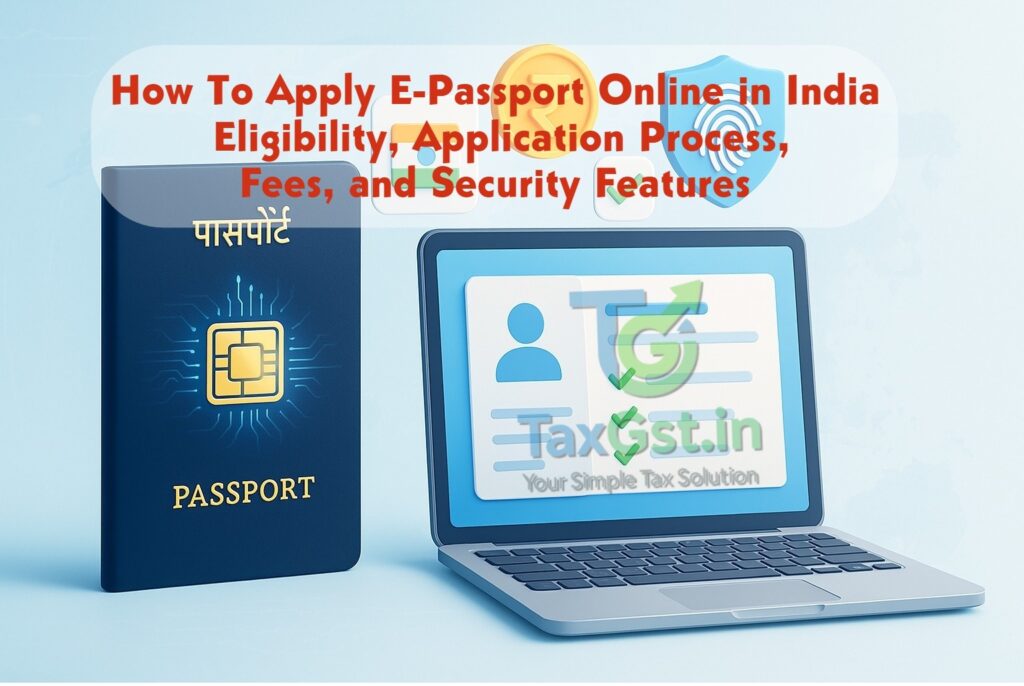
India’s e-passport rollout marks an important upgrade in how citizens travel abroad, combining faster processing at immigration counters with stronger protection against identity fraud. With chip-based passports now being issued under Passport Seva 2.0, the government aims to bring Indian travel documents in line with international biometric standards.
Also Read-RBI Mandates Weekly Credit CIBIL Reporting Mandatory from July 1, 2026
If you are planning an international trip and wondering how to apply for e-passport online in India, the good news is that the process is designed to be seamless. This isn’t just a cosmetic change; it is a fundamental shift verified by the underlying Passport Seva Programme (PSP) Version 2.0. Here is everything you need to know about this digital transition.
What Is an E-Passport?
At first glance, the e-passport looks identical to your current booklet, with one crucial difference: a small, golden camera icon printed at the bottom of the front cover.
This icon signifies the presence of a Radio Frequency Identification (RFID) chip and an antenna embedded within the passport’s jacket (specifically as an inlay).
Unlike the traditional machine-readable passports (which only had printed data and a barcodish strip at the bottom), this chip stores your personal particulars—name, date of birth, address—and your biometric data (fingerprints and facial scan). It acts as a digital mirror of the printed page.
Why does this matter? In the old system, a counterfeit agent could potentially alter the printed page. With an e-passport, any tampering with the physical page breaks the link with the digital signature on the chip, instantly flagging the document as fake during immigration scans.
Eligibility: Who Can Apply?
From the citizen’s perspective, eligibility for an e-passport is the same as for a normal passport. Any Indian citizen who qualifies for a passport under the Passports Act will be issued an e-passport now that the facility is available nationwide.
- Ordinary Citizens: The government has rolled this out for the “Aam Aadmi.” If you are applying for a Fresh Passport or a Re-issue (renewal), you are automatically eligible.
- No Separate Category: You do not need to select “e-passport” specifically. Since the May 2025 nationwide rollout, all 37 Regional Passport Offices are upgraded to issue chip-enabled booklets by default.
- Existing Passport Holders: If your current paper passport is valid for another 5-8 years, you do not need to panic or apply for an upgrade immediately. Your current passport remains valid until its expiry date.
Step by Step Guide: How to Apply for E-Passport Online in India.
Many applicants get confused looking for a special link. The secret to how to apply for e-passport online in India is that there is no separate application form—you simply apply for a standard passport. The system now defaults to the e-passport format.
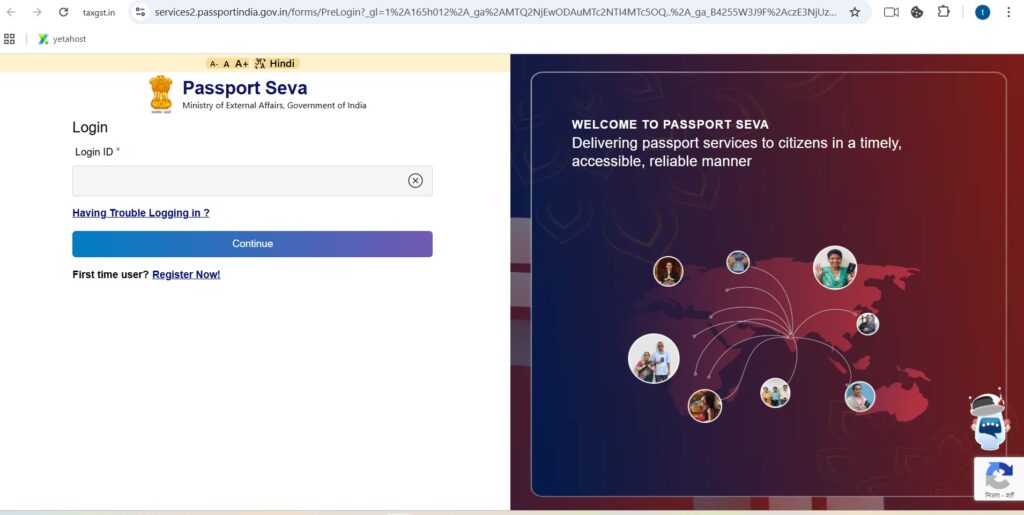
- Register on Passport Seva Portal: Visit the official website at passportindia.gov.in, click on “New User Registration” and create a login by providing basic details and a valid email ID.
- Login and Select Service: After activation, log in and choose “Apply for Fresh Passport” or “Re-issue of Passport”. This is the standard procedure for how to apply for e-passport online in India.
- Fill the Application Form: You can either fill the online form directly or download an e-form, complete it offline and upload the generated XML file. Enter accurate personal details, address, family information and emergency contact.
- Upload and Confirm Details: While some documents are verified physically at the Passport Seva Kendra (PSK), the portal may allow you to upload certain documents or link DigiLocker for ease. Make sure all details match your supporting documents.
- Pay Fees Online: Use the integrated payment options (internet banking, card, UPI, etc.) to pay the required fee. The system will generate an Application Reference Number (ARN) after successful payment.
- Schedule Appointment at PSK/POPSK: Click on “Schedule Appointment” and select a convenient Passport Seva Kendra (PSK). Since the upgrade in mid-2025, almost all PSKs are equipped to capture the biometrics needed for the e-chip.
- Visit PSK with Originals: On the appointment date, visit the PSK/POPSK with all original documents. At the counters, your photograph, fingerprints and signatures will be captured, which are the crucial inputs for the e-passport chip.
- Police Verification: Depending on the category (fresh, re-issue, Tatkal, etc.), the local police station may conduct verification. Keeping your address and contact details accurate helps avoid repeated visits.
- Track Status and Delivery: Use the ARN/File Number on the Passport Seva Portal or UMANG app to track your application. Once approved, the e-passport booklet is printed and dispatched by Speed Post.
Pro-Tip: Do not fall for third-party “fast-track” agents. The only way to get an appointment is through the official MEA portal. If the waiting time is long, check for “Tatkal” slots which open daily.
Rollout Status (2025 Update).
The phased rollout is now largely complete. While the pilot launched in Bhubaneswar and Nagpur, the Ministry of External Affairs (MEA) successfully expanded the facility to all 37 Regional Passport Offices (RPOs) by May 2025.
Major Offices Now Issuing E-Passports:
- Delhi & Mumbai
- Bengaluru & Chennai
- Hyderabad & Cochin
- Ahmedabad & Kolkata
- Chandigarh & Lucknow
- (And all other RPOs nationwide)
Note: If you apply today, you will almost certainly receive a chip-enabled e-passport.
Fee Structure (2025).
The government has maintained the fee structure of the traditional passport for the e-passport during this transition phase. There is no “chip surcharge” passed on to the citizen yet.
| Service Category | Booklet Size | Validity | Fee (Normal) | Fee (Tatkal) |
|---|---|---|---|---|
| Fresh Passport (Adult) | 36 Pages | 10 Years | ₹1,500 | ₹3,500 |
| Fresh Passport (Adult) | 60 Pages | 10 Years | ₹2,000 | ₹4,000 |
| Passport for Minors (<18) | 36 Pages | 5 Years | ₹1,000 | ₹3,000 |
| Re-issue (Renewal) | 36 Pages | 10 Years | ₹1,500 | ₹3,500 |
| Re-issue (Renewal) | 60 Pages | 10 Years | ₹2,000 | ₹4,000 |
| Lost/Damaged Passport | 36 Pages | – | ₹3,000 | ₹5,000 |
Note: Tatkal fees include the base fee plus the additional Tatkal charge. Police Verification fees (usually ₹500) may be charged separately depending on the state policies.
Key Security Upgrades.
The e-passport is built on a “Trust but Verify” model. Here is the tech stack protecting your identity:
- Front-End Personalization: The personal details are laser-engraved on a polycarbonate page in some versions, or chemically sensitized on high-security paper, making physical erasure impossible without destroying the page.
- PKI (Public Key Infrastructure): The data on the chip is digitally signed by the Country Signing Certification Authority (CSCA) of India. When you land in London or New York, their border control system uses India’s public key to verify that the data on your chip was indeed written by the Indian government.
- Skimming Protection: The chip is read-protected. It requires a specific key (derived from the machine-readable zone printed on the passport) to unlock. This means a hacker cannot simply walk past you in an airport with a scanner and steal your details.
Benefits for the Common Traveler.
Why should you care about a chip in your passport?
- Faster Immigration: Many international airports (like Dubai, Singapore, Heathrow) have “E-Gates.” Currently, Indian citizens often have to stand in the manual queue. With an e-passport, we can eventually negotiate access to these automated lanes.
- Damage Control: The electronic storage acts as a backup. If the printed page faces wear and tear, the chip data can still be read by officials, preventing you from being stranded.
- Global Acceptance: It removes the scrutiny Indian travelers sometimes face regarding document authenticity. The chip provides instant validation.
Looking Ahead.
India’s shift to e-passports under Passport Seva 2.0 is a strategic move that combines security, convenience and international interoperability. As more citizens receive chip-based booklets, e-passports are set to become the norm.
For ordinary Indian travelers, this means shorter queues where automated gates are available and stronger protection of personal data. Keeping an eye on official MEA announcements will help applicants stay updated on the latest features.
Frequently Asked Questions (FAQs) on India’s E-Passport
How do I apply for an e-passport online in India?
Is it mandatory to convert my old passport to an e-passport?
What are the e-passport fees in India for 2025?
Does the Indian e-passport allow visa-free travel?
Is the e-passport chip safe from data theft?
Can I apply for an e-passport if I am living abroad?
Disclaimer: This information is for general guidance and based on the latest available updates as of late 2025. Please verify all details with the official Ministry of External Affairs website (passportindia.gov.in) before applying.
Tags: e-passport India, Passport Seva 2.0, biometric passport India, Indian passport renewal 2025, e-passport fees, apply for e-passport online, Indian immigration updates
Trusted Authorities and Official References
- Passport Seva Portal – Ministry of External Affairs – Official portal for Indian passport services, online application, fee calculator and PSK/POPSK locations.
- MEA e-Passport FAQs – Official FAQs on chip-based e-passports, features and rollout.
- Rajya Sabha Q&A on Chip-Based E-Passports – Parliamentary reply outlining technical and security aspects.
- ICAO – ePassport Basics – International Civil Aviation Organization explanation of e-passport standards.
Discover more from TaxGst.in
Subscribe to get the latest posts sent to your email.


Stay Updated!
Join our community for latest tax updates, GST news & finance tips